How to stay productive and calm during the quarantine in academia – 10 tips

Hi all, I am writing this post on tips to maintain productivity during the quarantine period. Many people are staying alone, and away from their families, so it is likely that they feel anxious, worried, distracted, or even bored staying at home. Social media makes it challenging to stay focused and also leads to loss of productivity. We feel that we will accomplish more targets while staying at home, but that is not the truth.  When I heard the news about the Corona outbreak and how things are shutting down, I felt extreme fear and helplessness. I was lost and disturbed thinking about the uncertainty in our future, our career, our families – it is too overwhelming to handle.

So,

My first tip is to STOP!!! Don’t be glued to Whatsapp messages and other social media content about panic and rumors and rising number of cases.

The first thing to remind ourselves is that we are safe in our homes, and so are our families. We have to let only positive thoughts enter our mind and block all negativity.

I will discuss some tips to help improve our focus and productivity:

  1. MEDITATE: I can’t emphasize enough on the power of meditation, especially during this time of chaos and panic. It instantly calms and relaxes our mind and gives us more energy to focus on our work.
  2. EXERCISE: Any form of exercise – yoga, Pilates, strengthening, or even dancing. It is especially useful when we are sitting at home, and our physical activity is low. It boosts our concentration and makes us more productive
  3. ORGANIZE/PLAN: Most of us feel lost because now we don’t have a structured routine. So write down your timetable and ‘things to do’ for each day. You should make an effort to complete those things before going to bed. Don’t keep targets for weeks or months. Instead, keep it day-wise.
  4. DECENTRALIZE– It is a technique in psychotherapy in which we have to shift our focus from something negative/disturbing to something neutral or not to elicit emotions.  So the best way to decentralize is to share ‘non-corona news/non-corona memes/non-corona jokes’ and instead watch a comedy movie, play games with roommates, or cook a healthy meal.
  5. START SMALL – If you are finding difficulty in focusing at work, then take tiny steps and keep small goals. Even if you read one page of an article or write one paragraph in a day is fine. Just keep moving forward, no matter how small the steps are. It will make you confident in achieving your daily goals.
  6. ENGAGE IN YOUR HOBBIES: Not because you have the time for your hobbies but because it will keep you focused and positive. It will set a positive tone, and you will feel a sense of accomplishment.
  7. STAY CONNECTED: Stay connected with your Ph.D. friends and supervisors to get motivated in your goals and to update your progress time-to-time. It will also help to develop a sense of belongingness to your research community.
  8. PSEUDO OFFICE: We tend to think that we are at home, so there are no rules, but, to boost our productivity, create a pseudo office. Imagine as if we are still at our workplace and follow the same timings and office routine. Don’t take the liberty of skipping your work routine.
  9. PRACTICE GRATITUDE: It is an effective technique to beat the blues. Either reflect on things that are good in your life or try journaling. Feeling thankful is a shortcut to feeling positive. It is also a good time to write down the acknowledgments for your Ph.D. thesis 🙂
  10.  SELF-CARE: Self-care is essential for a healthy body and mind. Take out time every day for self-care activities such as eating healthy, sleeping well, taking care of your pets or plants, taking a hot bath, or anything that makes you happy.  

This post is NOT on ‘Things to do at home when you are bored’ but on how to improve our productivity and maintain our mental health while actually #workingfromhome

I hope you find it useful. Have a safe and productive quarantine. Remember, we are together in this!

Amreen

Qualitative data analysis – step by step guide

Welcome back to scienceIQ! Qualitative research explores the quality of the situation/phenomenon. It has nothing to do with p-values or mean differences. The purpose of qualitative research is to understand the phenomenon and NOT to generalize the findings.  Qualitative research is not so popular in the health sciences. It originated and developed from social sciences. In this post, I will be discussing a few simple steps to analyze qualitative data.

We tend to think that conducting qualitative research is easier compared to quantitative research, but, in my experience, it is the opposite. A qualitative study requires a much deeper understanding of the data. It has to be supported by theoretical background. The analysis of qualitative data does not happen with a click of a button. Instead, it requires a lot of brainstorming and visiting and re-visiting the data. You need to be intellectually involved and accountable for your findings. It is more like art, where we attempt to draw a somewhat realistic picture of the phenomenon. I have talked more about it in my last post on qualitative research (https://scienceiq.blog/2019/08/14/qualities-of-a-qualitative-researcher/)

So, here I would be discussing a few simple steps to kick start your data analysis:

STEP 1: Transcribe your data – The most common methods of qualitative data collection are focus group and interviews, which is audio taped. So, as a very first step, we need to transcribe the interviews/focus group discussions into our laptops.  The transcription has to be word-to-word, as told by the participants. You can’t change the sentences or meaning of the data while transcribing. It is called as ‘verbatim’ – exact words of the participants. I must tell you that transcription is a verrryyy lengthy and tedious task. You have to listen to each sentence carefully from the audio recording and type it as it is. It may take days to complete the transcription of one interview. So, you have to type, type, and type.

STEP 2: Read and re-read your transcripts – What I learned during a data analysis workshop was to read each transcript (the transcribed interviews) thrice. Once you should read superficially to have an idea about the content, then read twice with more details and understanding before starting to code your data. It is known as ‘deep hanging out’ with your data. Read and think and then think and read. It involves a lot of cognitive processing.

STEP 3: Start coding – Codes are the summary of the phrases and sentences of your interviews. Through coding, we are trying to condense the large chunk of information that we have collected in our research. It means labeling the text. E.g., If I have a verbatim such as “I was satisfied with the treatment, it made me recover better. I keep telling my friends about it,” so I would condense this piece of information by labelling it as ‘patient satisfaction.’

GOLDEN RULES OF CODING:

  • Be as close to the text as possible.
  • Don’t be too broad or too specific while developing codes. Codes have to be repeated in other transcripts as well, so keeping it very specific will not make it reusable in other transcripts.
  • The context of the text is equally important.

Thus, a better code would be ‘patient satisfaction with treatment.’ 

STEP 4: Data analytical cycle – Once you have completed coding of all the transcripts, then start the analysis. It is a cyclic process that involves going back and forth to the data. Data analytic cycle consists of the following components:

a) Description b) Comparison c) Categorization d) Conceptualization and e) Theory development.    

Description is often called ‘thick description’ in qualitative research because it has to be as explicit as possible. When describing, we give a detailed account of the phenomena. It includes describing a) breadth (range of experiences & different dimensions), b) depth (what & why) and, c) context of the phenomenon (where, when who.)

Comparison means comparing the data between cases. Here you compare the information provided by different categories of participants, e.g., young versus old, rich versus poor, acute versus chronic, urban versus rural, so on, and so forth. You have to compare and contrast the perceptions/experiences of the participants and develop meaning out of it. You should know the reason for the difference (if any) in their opinions.  You should also know if there is something which is left unexplored in your study.

Categorization is a relatively simpler task in the data analytic cycle. It involves grouping similar codes into broader categories or themes. E.g., if I have codes such as anger, anxiety, frustration, etc., then I would group it as ‘negative attitude.’ Remember, the code groups have to be based on your research objective and the primary question that you aimed to answer. Once you have categorized the codes, you can start writing the details of each category/theme.

Conceptualization is a very crucial aspect of qualitative data analysis, and new learners often miss it. It involves making links between categories and finding a bigger picture from your data. You have to summarize the core concepts that were derived from your data. It includes telescoping – that means zooming in and zooming out of your data to understand the concepts. I know it sounds a little daunting, and it is… but you will be able to do it with sound knowledge in your research area.

Theory development is the last and eureka moment in qualitative studies. We usually do not develop theories from every research we conduct. But with years of experience and research in a particular field, you may develop a new theory, or verify an existing one or contradict a current theory or even add to an existing method.

So, in summary, transcribe your data, code it well, group codes into categories, compare, and conceptualize. Some of the software programs that can help in qualitative analysis are:

  • Open Code 4.2
  • ATLAS.ti
  • Nvivo
  • MAXQDA

Many people have asked me about the software for qualitative analysis. They think that using the software will analyze the data, just like SPSS. But you should know that software doesn’t analyze qualitative data. Your brain, your experience, and reflexivity during data collection help in data analysis. It is you who can explain your qualitative findings and not the software. The software just manages the data and helps in organizing it.

That was all on qualitative data analysis. There are several other ways and methods to approach qualitative data, but I felt these were a few simple steps to begin with. I hope you found it useful.

Happy learning!

HOW TO IDENTIFY PREDATORY JOURNALS AND CONFERENCES

Hi all, welcome back to scienceIQ. Today we will discuss an interesting and important topic on publishing in predatory journals/conferences. The term ‘predatory’ literally means exploiting someone for their benefit.  It has a similar meaning when we talk about predatory journals.

What is a predatory journal – Predatory journals are money-making journals that compromise science by skipping the peer review process and publish for the sake of money collected from the authors. They lure young researchers and students with their fast publication and no-rejection policy. Naïve researchers are most likely to fall into this trap of super-easy publishing. It completely skips the scientific evaluation of a paper that defeats the purpose of publication.

Before we submit our research to any journal or think of presenting it in any conference, we should thoroughly analyze the quality of the journal or conference. It is like solving a mystery or puzzle. We have to be extra alert and cautious. Here are a few tips to help you make the decision.

  • Journal indexing – I feel the first thing to check in a journal is its indexing. You can consider submitting your paper if the journal is Scopus or Web of Science indexed. PubMed is also good, but there is a rise of predatory journals in PubMed too. You can also go and check the quartile to which your journal belongs in Scopus. Quartile 4 should be a red flag sign.
  • Journal title – Journal title is the first thing we see before submitting a paper, and predatory journals know that. That is why the title of predatory journals will generally be “International journal of something” or “World Journal of something else.” It may not provide a detailed idea about the journal, but it may give you a hint to investigate further.
  • Fees transparency– Look at Article Processing Charges (APCs) before submitting your paper. Usually, good quality journals state their APCs outright and show transparency in publication charges. Open access journals have APCs for publication. Predatory journals will not provide any details or structure for APCs, and they claim the money after you send your paper to them. I was also a victim of one such journal but we (my supervisors and I) decided to withdraw the paper after they asked for the money, which was not disclosed anywhere on the website. So thankful for that decision.
  • Publication time – The next thing to identify is the time taken from submitting the paper to its publication. Usually, journals take six months to 1 year for publishing after submitting the paper. A very fast process should be critically analyzed because it shows a lack of peer-review, which is the hallmark of a predatory journal. If a journal is readily accepting your paper without any corrections or revisions and publishing articles within a week or month, then be very cautious. You may be trapped. 
  • Editorial board – Another important aspect to look for is the credibility of the editorial board. Are they professors in a University or hold a permanent academic position? What is their expertise and years of experience? Check their profile on their university website and even their H-indices. Everything matters.

By now, you would have decided on the standard of the journal, but if in doubt, go ahead and analyze it further.

  • Grammar errors – If you read between the lines, you may find few typo/spelling errors. You can also look for grammatical or English errors on the journal website. If you are easily able to find such flaws, then there are high chances of it being a predatory journal.
  • Personal email ids – Another important area to explore is the email addresses of the editors. Mostly, the editors provide their university email addresses but, if you find their personal email ids such as Gmail and yahoo, then double-check the credibility of such a journal.
  • Website homepage – Check the website homepage and see it is too catchy or attractive – colorful styles, huge fonts, and flashy links. It may not look like a scientific journal. Also, check the previous volumes and issues of published articles. Reading articles published in a predatory journal may also give some form of a clue – fraudulent or spurious articles.  
  • Scope of journal/conference – Another peculiar thing about the predatory journals is that they cover diverse topics and areas. They may publish articles related to agriculture, social science, or medicine, and almost everything. So, always look for streamlined and focused journals in your field.
  •  Publication by invitation – This is a trending style of predatory journals/conferences. You will get ten invitations per day in your inbox to publish in such journals. We recently got an email from some conference stating that we will be awarded for our previously published paper. When we read further, it stated that we need to register for the conference and pay 8000 INR to receive the award! We don’t have to spend money to get such awards.

So, these were a few tips for identifying any predatory journals/conferences. I came to know about it by attending various seminars and conference sessions. Remember, it is very easy but FOOLISH to publish in a predatory journal. You will never become the scientist that you want to become by publishing in these journals.  Be careful.

Happy Learning,

Literature Review – a guide for beginners

Hi all, welcome back to scienceIQ! I am writing a post after a long time, but I will keep posting as and when possible. So, stay tuned. Today we will discuss Literature Review. Yes, it is the most disliked process in conducting research, and it is the first challenge that we all have to face before starting our research project. We know that literature review is MANDATORY for any proposal submission. So, we cannot escape from writing pages and pages of literature review. In this post, we will see why we should do a literature review and few tips for doing it well.  

Benefits of a Literature Review:

I know that it is a daunting work, especially for beginners, but I cannot emphasize enough on the importance of a thorough literature review. Firstly, literature review helps you to understand the intricacies of your topic: what has been done, what has not been done, which method is evidence-based, which methods/techniques do not have any evidence, lacunae in literature, how a method/treatment can be simplified or improved, what is the need of the study, and how can you approach a problem in a novel and feasible way. You can never get the answers to these questions until you have reviewed the literature thoroughly. It not only gives you the knowledge about your topic but also makes you confident in it. Secondly, it will provide a scientific basis for your study. Also, it will prevent you from unnecessary duplication of the existing studies.

Tips for conducting a literature search:

Here are a few tips that will simplify your literature search:

  1. Use keywords and set an alert for your keywords in different databases: you will get an email on the latest articles published on your topic, so you are never missing any relevant article.
  2. Read the papers superficially before downloading an article, so that you have some idea about articles stored in your library.
  3. Categorize in separate folders – It is one of the lifesaving steps in a literature review. As you must be knowing that literature review is not only done at the beginning of your proposal, but you will have to keep reviewing articles throughout your study period, so please categorize the articles into separate folders. Be as specific as possible in creating folders for different sets of articles. E.g., articles on the prevalence of the problem, articles on one-type of intervention, articles on latest techniques, feasibility articles, systematic reviews, so and so forth. This tip will also help in writing the literature review better.
  4. Use tables to summarize the articles when it gets too overwhelming to deal with the humongous amount of published articles.
  5. Never forget to screen the reference lists of the relevant articles for finding more articles on your topic.
Tips for writing a literature review:

Here are a few easy tips for structuring your literature review:

  1. The first tip for writing a review is to start broad. Briefly explain the topic to the readers, and what is interesting about it. Introduce relevant terms and definitions.
  2. Write about the history of the topic, i.e., what has been done previously and identify gaps in the literature.
  3. Explain about your hypothesis and how it will help in addressing the gaps in the literature.
  4. Justify your theoretical framework and your approach for solving the research problem.
  5. Critically appraise the literature. Do not summarize the existing literature; instead, be critical and provide deeper insights into the topic. E.g. write about conflicting findings, or the methodologies used, uniqueness of the studies or its limitations.
  6. Do not forget to write in a logical flow. When we are writing details on a particular topic, then we are likely to get deviated but maintain a logical flow even if you have to skip few ‘not-so-important’ studies.
  7. Don’t be boring and monotonous. I know it is difficult, but it will come with practice. I have not achieved it yet 😛
  8. Keep reading published literature reviews. It will help you understand the writing pattern and will improve your writing skills.
  9. Do not plagiarize; do not let it become your habit.
  10. Ask your friends to read your draft and see if they can understand it.
  11. Proofread.

Here are a few other references on literature review:

  1. Ten Simple Rules for Writing a Literature Review by Marco Pautasso (Pautasso M (2013) Ten Simple Rules for Writing a Literature Review. PLoS Comput Biol 9(7): e1003149. doi:10.1371/journal.pcbi.1003149)
  2. Davies, W. M., Beaumont, T. J. Design and layout: Pesina, J.  The University of Melbourne

That was it. Even if you have completed your review, you can use a few tips to improve it further. Happy writing! 

Qualities of a Qualitative Researcher

Welcome to the post on qualitative research. Qualitative research is relatively new in the field of health sciences, so, I thought that it would be good to discuss a few characteristics of qualitative researchers. Qualitative research differs from quantitative, and so do the qualities of the researchers. Here are a few qualities which a qualitative researcher must possess to carry out research efficiently.

  • Bricoleur – Qualitative researcher collects information from experiences, life stories, observations, interview, historical monuments, etc.  Qualitative researcher is considered a ‘Bricoleur’ which means ‘quilt maker’ who brings together bits and pieces of cloth to create a beautiful quilt or bricolage. Similarly, qualitative researcher joins pieces of information from various sources to create new knowledge, or find meaning in a given phenomenon.
Bricolage
  • Researcher as an integral part of context – Qualitative researchers know that their presence influence the context and their gender, race, caste, background, etc. has an impact on the phenomenon being studied. The qualitative researcher is not separated from the context but becomes an active part of this interactive process.
  • Multi-tasking – A qualitative researcher does multiple tasks together, such as observing a phenomenon, interviewing or asking questions, self-reflection, analysis, and interpreting the data. Unlike quantitative research, qualitative data analysis occurs inside the mind of the researcher. Making meaning out of the information collected cannot be done by any software but by the researcher himself.
  • Research as an art – Qualitative researchers know that research is a complex and refined art wherein the researcher uses different patterns and colors to bring out the true meaning of a phenomenon. Qualitative researchers bridge chunks of information to create a dense collage-like masterpiece.
  • Phenomena in a natural context – Qualitative researchers study a phenomenon in its natural setting – as things are and not as it ‘should be’ in fixed laboratory conditions. They study a situation as an ‘insider’ and interpret events as it is occurring naturally. They understand that context is dynamic, ongoing, and are receptive to changes in the natural environment. Context is given the highest priority in qualitative research.
  • Importance for stakeholders – Qualitative researchers understand that the finding of the research applies to people and has social and political implications, so they conduct research more conscientiously. They understand, accept, and acknowledge that qualitative research is storytelling about a phenomenon studied from different perspectives.

These were the few abilities of a qualitative researcher. I did not aim to compare qualitative with quantitative but to highlight the nuances of qualitative research. For further reading, I suggest Denzin and Lincoln 1994 if you are interested to know more about qualitative research. Hope you found it useful 🙂

How to do Meta-analysis in a Systematic Review – Do it yourself!

Hi, welcome back to the systematic review posts. In the last blog post, we discussed the risk of bias assessment of included studies in a review (https://scienceiq.blog/2019/04/18/how-to-do-risk-of-bias-assessment-in-a-systematic-review/). Today, we will move one step further and learn how to do the meta-analysis of the included studies. This post is a step by step tutorial so you can follow each step and perform the analysis as you read.  Before we begin, I would like to give a brief introduction about meta-analysis and when it should be done.

Meta-analysis is a pooled analysis of all the included studies. While you may be analyzing your single study, in the meta-analysis, you will have to pool the results of all the studies and then analyze to get the final result. Now, you may be wondering why we should do a meta-analysis.In literature, few studies may be against a particular intervention, and few may be for it. Then you do meta-analysis and take a final decision about the effectiveness of an intervention based on your results.

It may sound easy, but there are certain criteria which should be followed before considering meta-analysis. Firstly, you should have a homogeneous data, which means that all the studies should have similar outcomes with similar units of measurement. E.g. For pooling data and analyzing gait speed, all the studies should have measured gait speed. If few have measured gait cadence, few have measured balance, and one study has measured gait speed then you won’t be able to do a meta-analysis for gait speed. Secondly, it is advisable to consult a statistician or your supervisors for deciding which outcomes you want to analyze and how you should go about it. There are innumerable ways to analyze the data depending on your objectives.

I have used Review Manager (RevMan) software for the analysis and attached screenshots for each step. Let us see how:

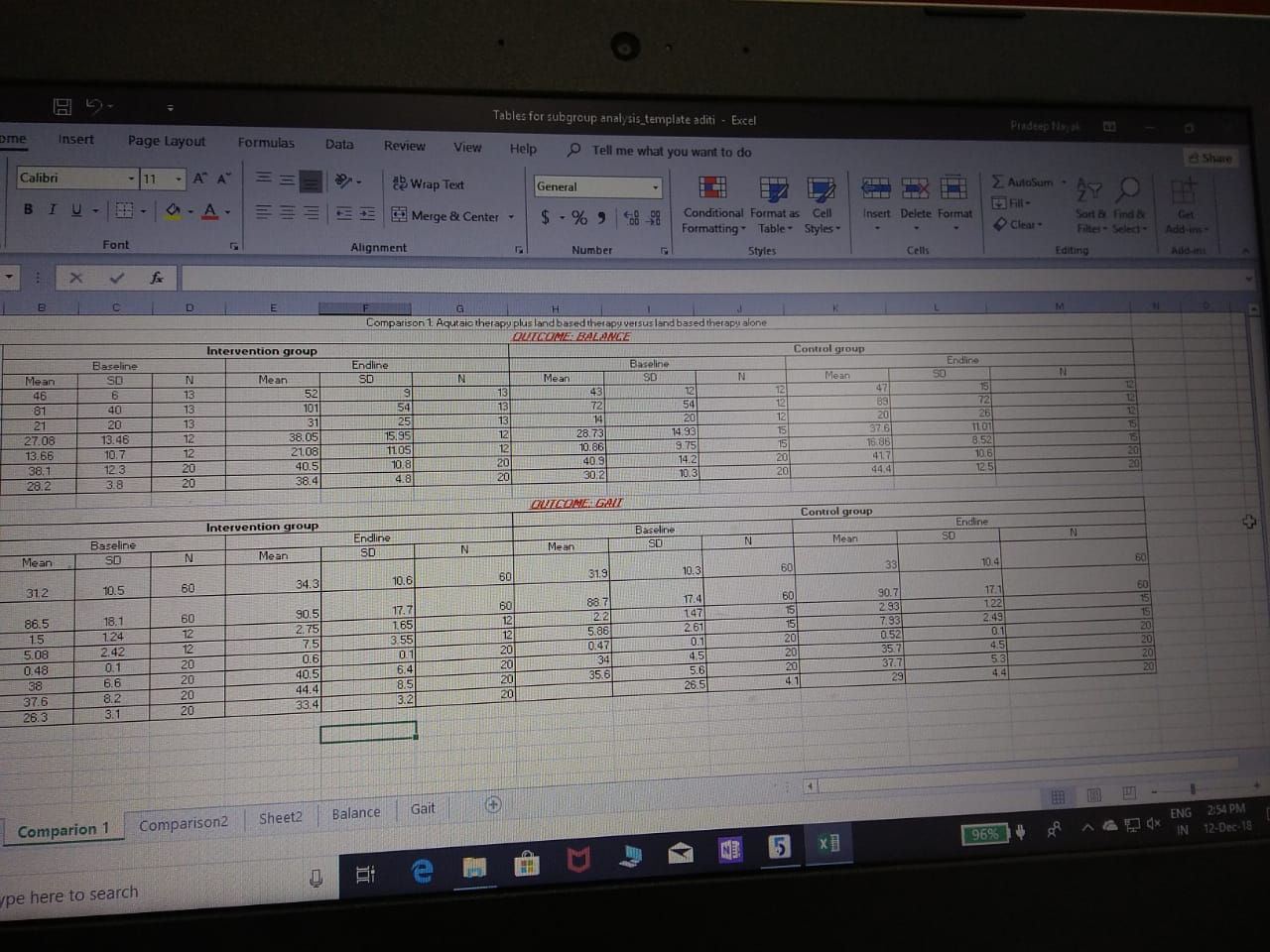
  1. Extract all mean values from the included studies in an excel sheet as shown in the picture below.

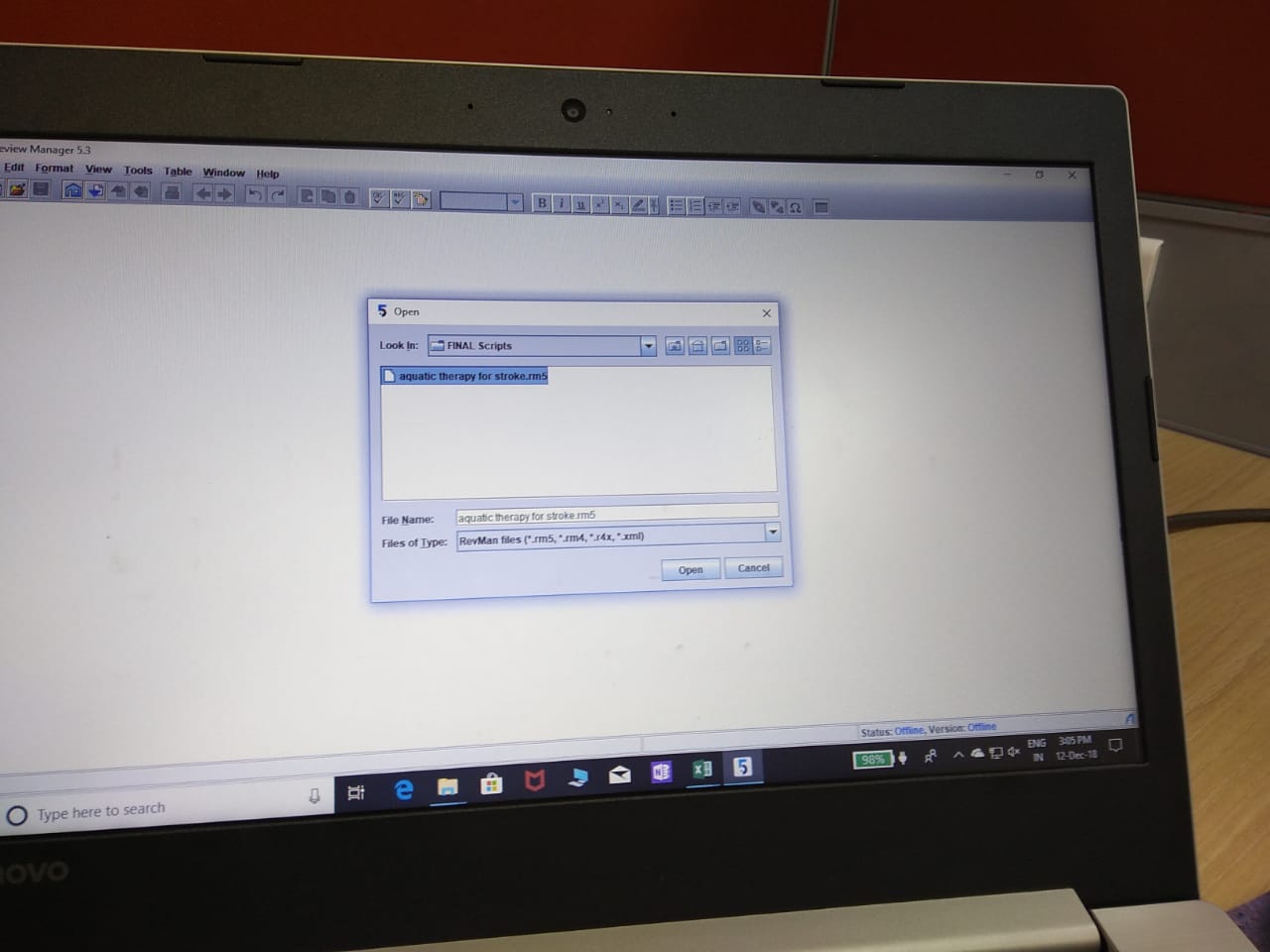
2. Open RevMan software and choose your review

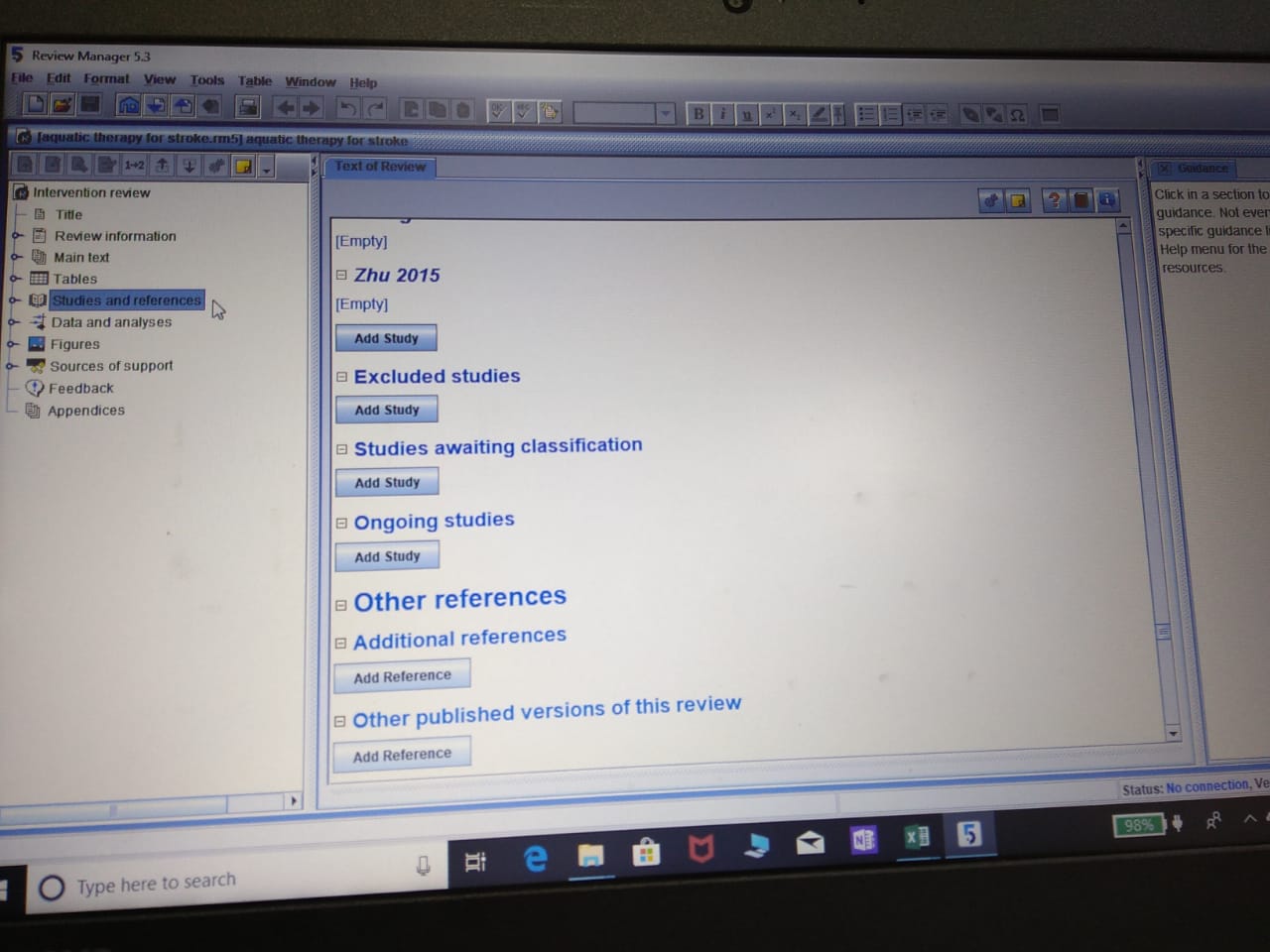
3. After opening the file, click on the study and references option as shown below and add study under characteristics of included studies

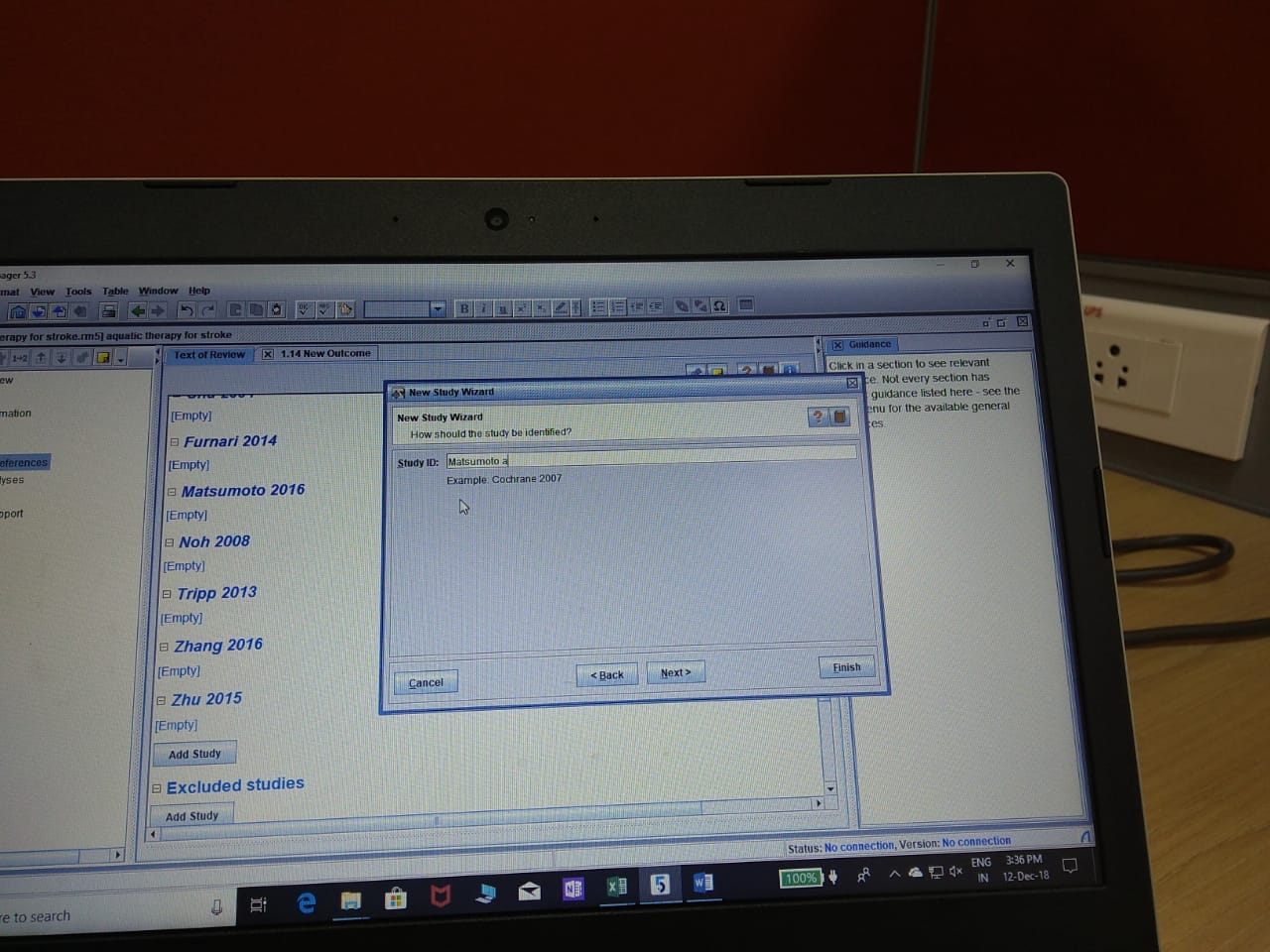
4. Enter all the included studies as shown using first author name and year of publication

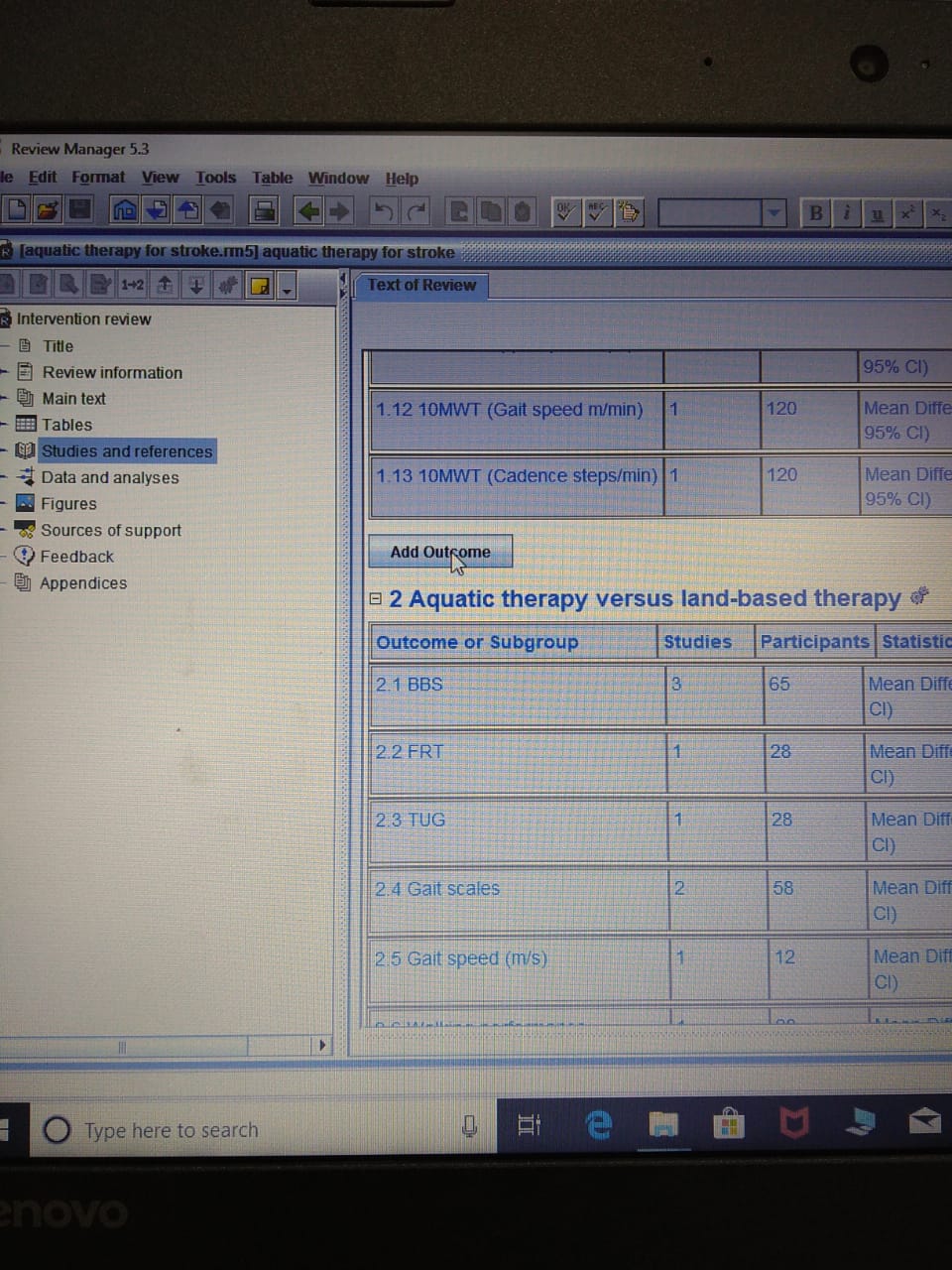
5. After adding all the studies, click on add outcome – under data and analyses option

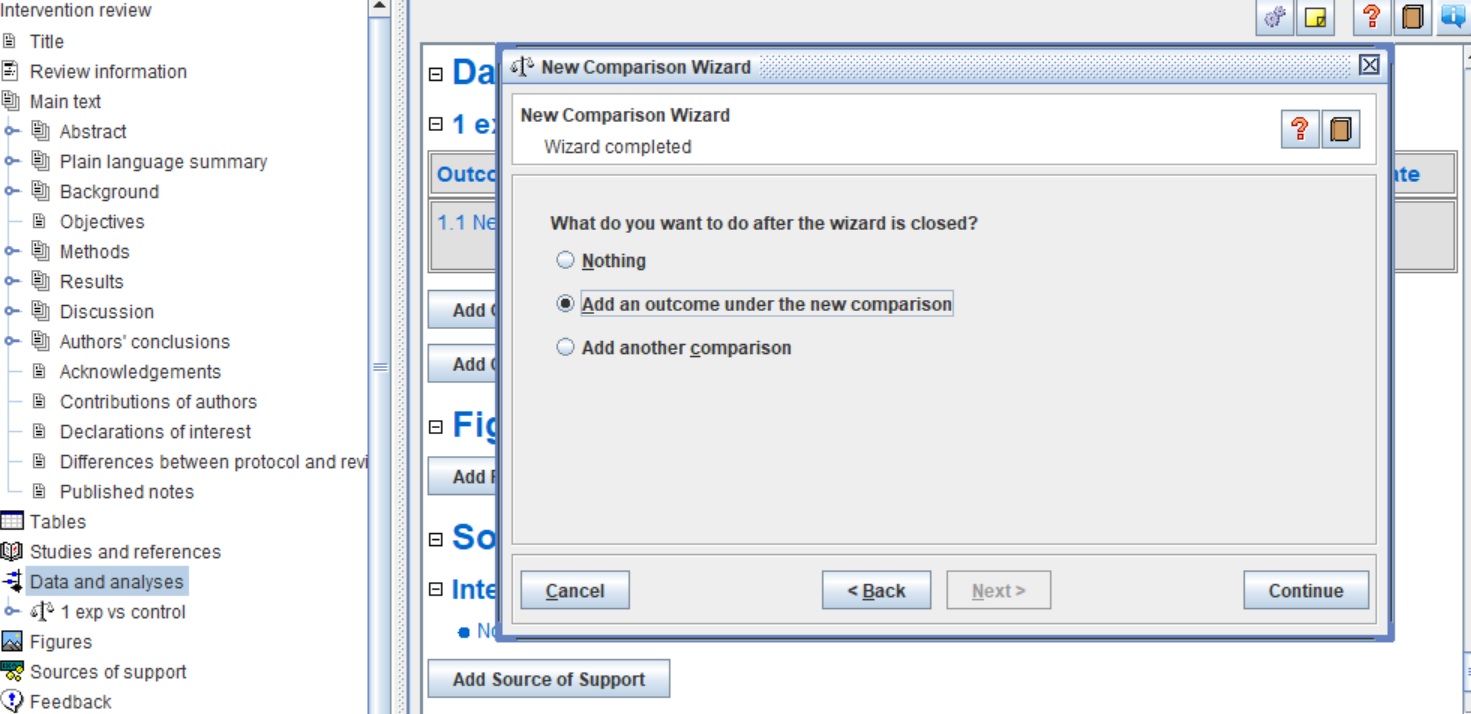
6. Following which, a new comparison wizard opens where you have to click on – add an outcome under new comparison

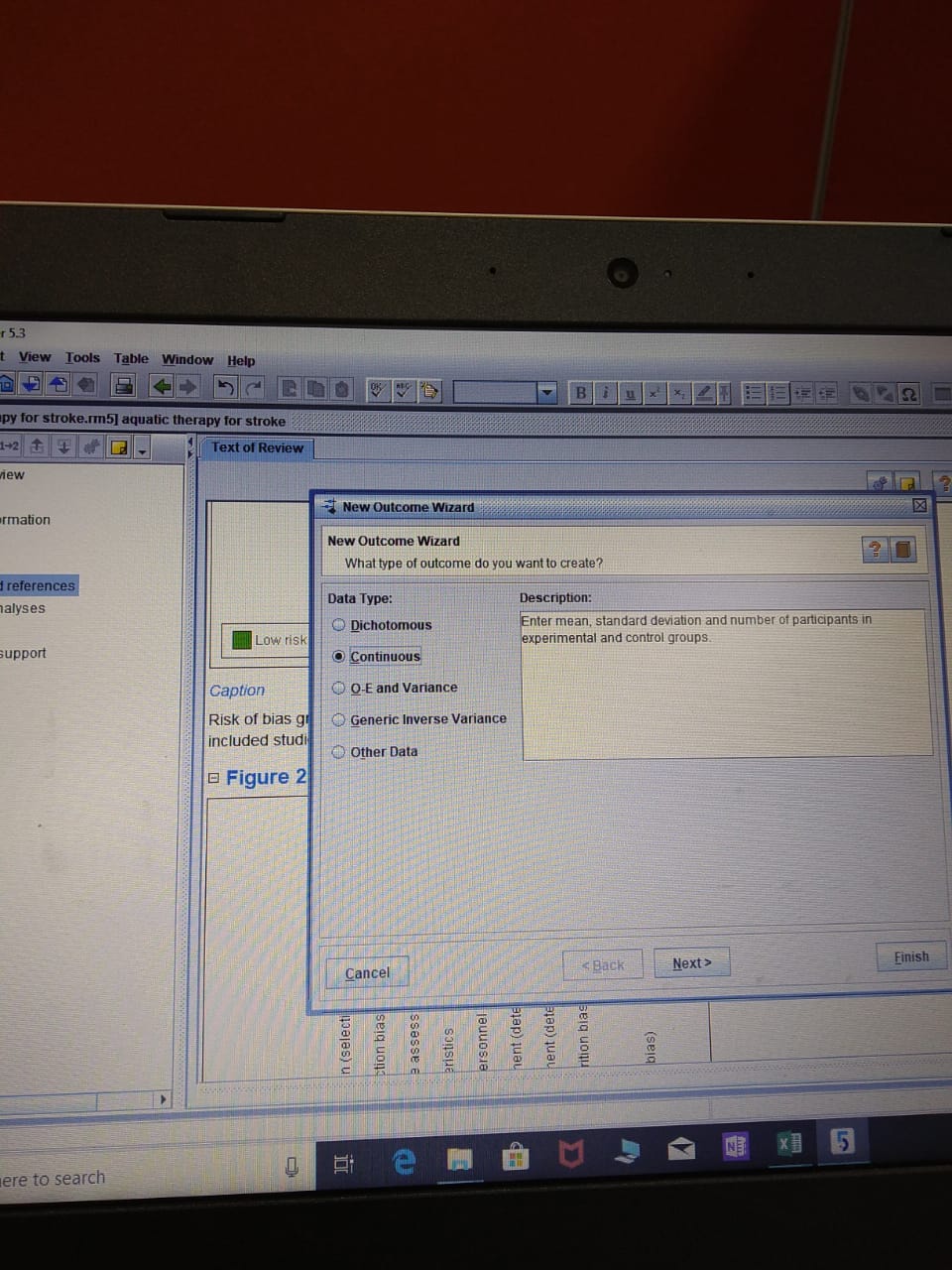
7. Go to continue and then click on continuous data. You can change it based on the type of your data.

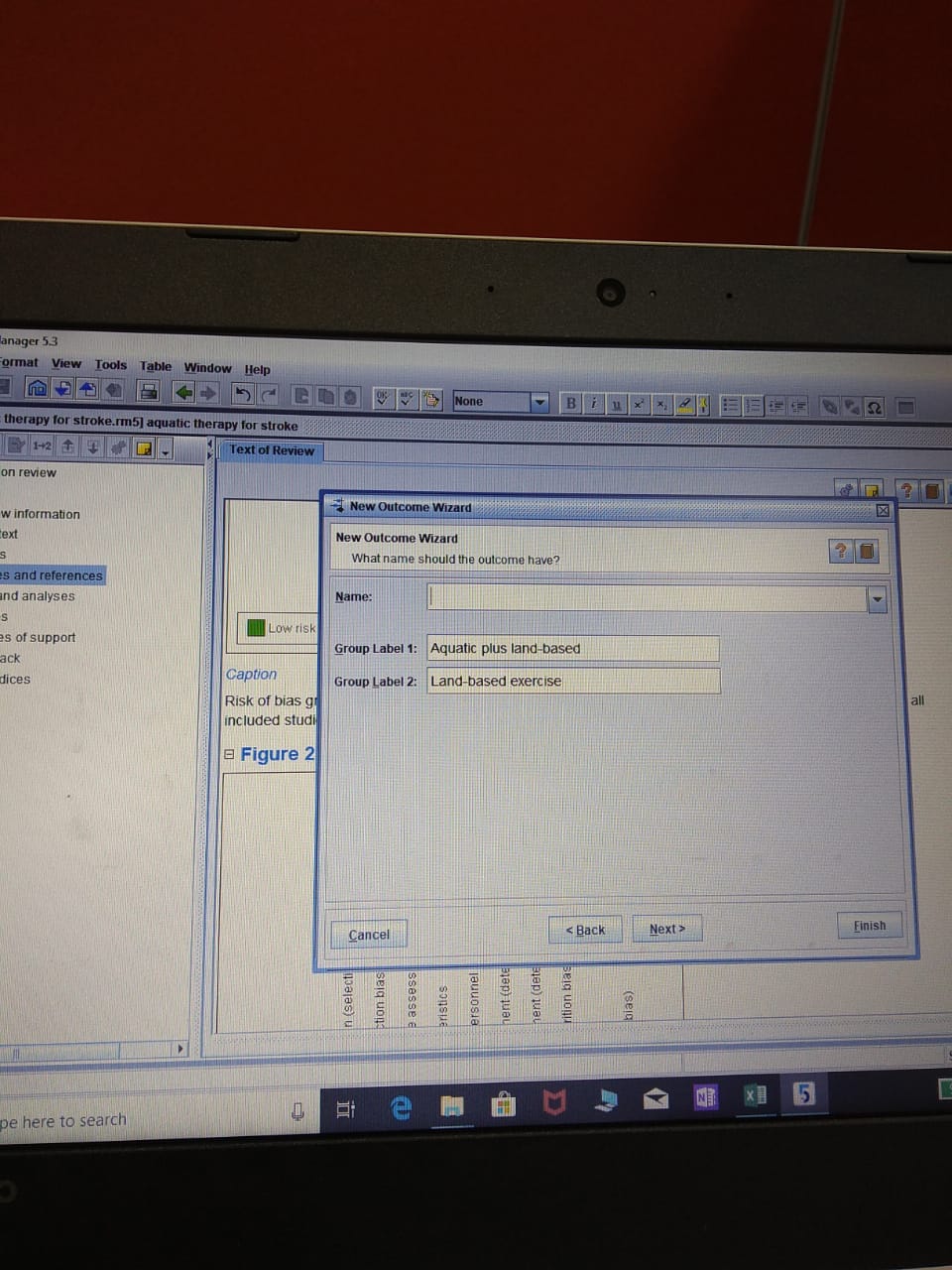
8. Click on next and enter the outcome measure which you are analyzing. Eg. Gait speed

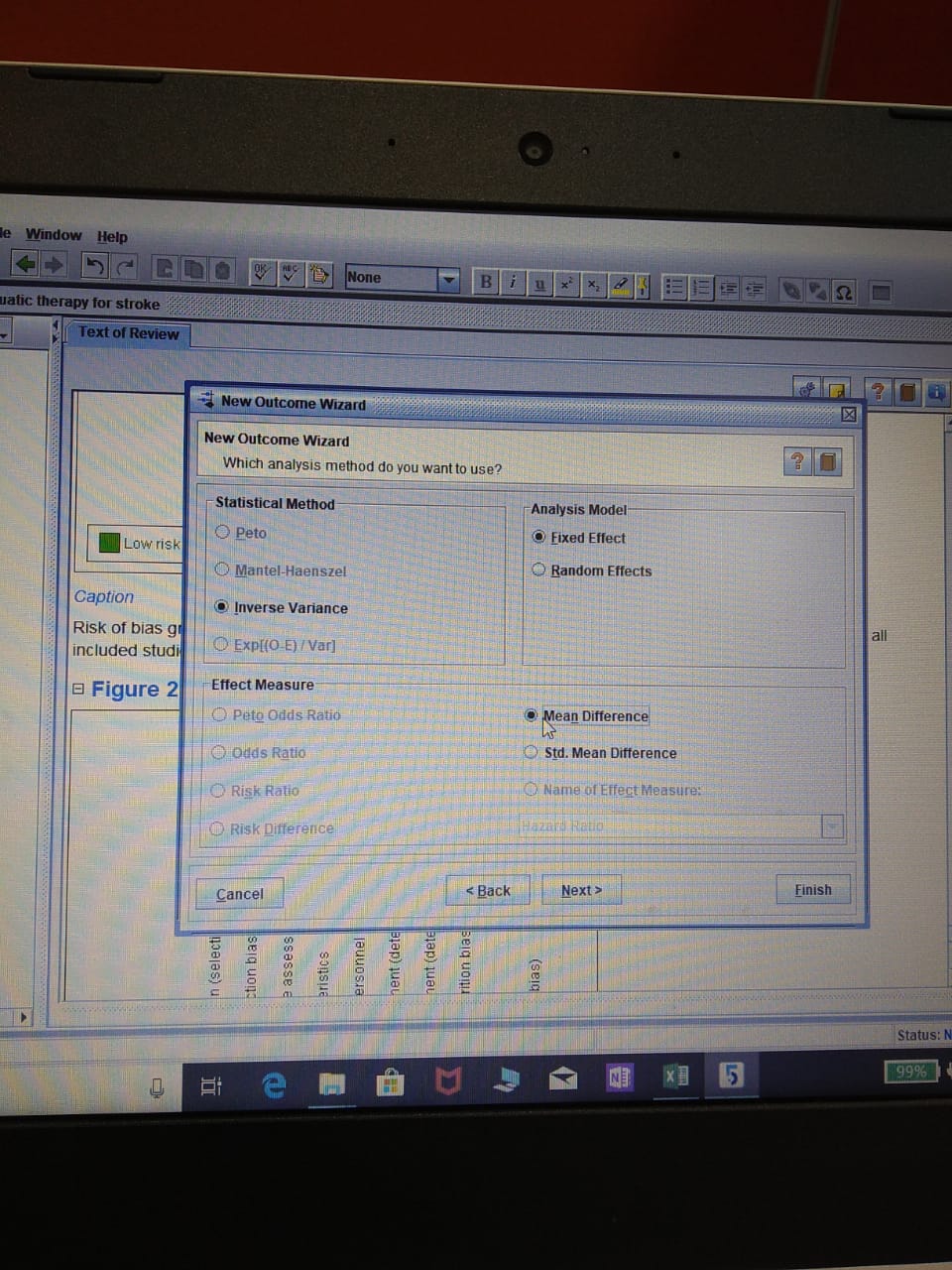
9. Click on next. Depending on the type of analysis you wish to perform, click on either fixed effect or random effect; mean difference or standard mean difference.

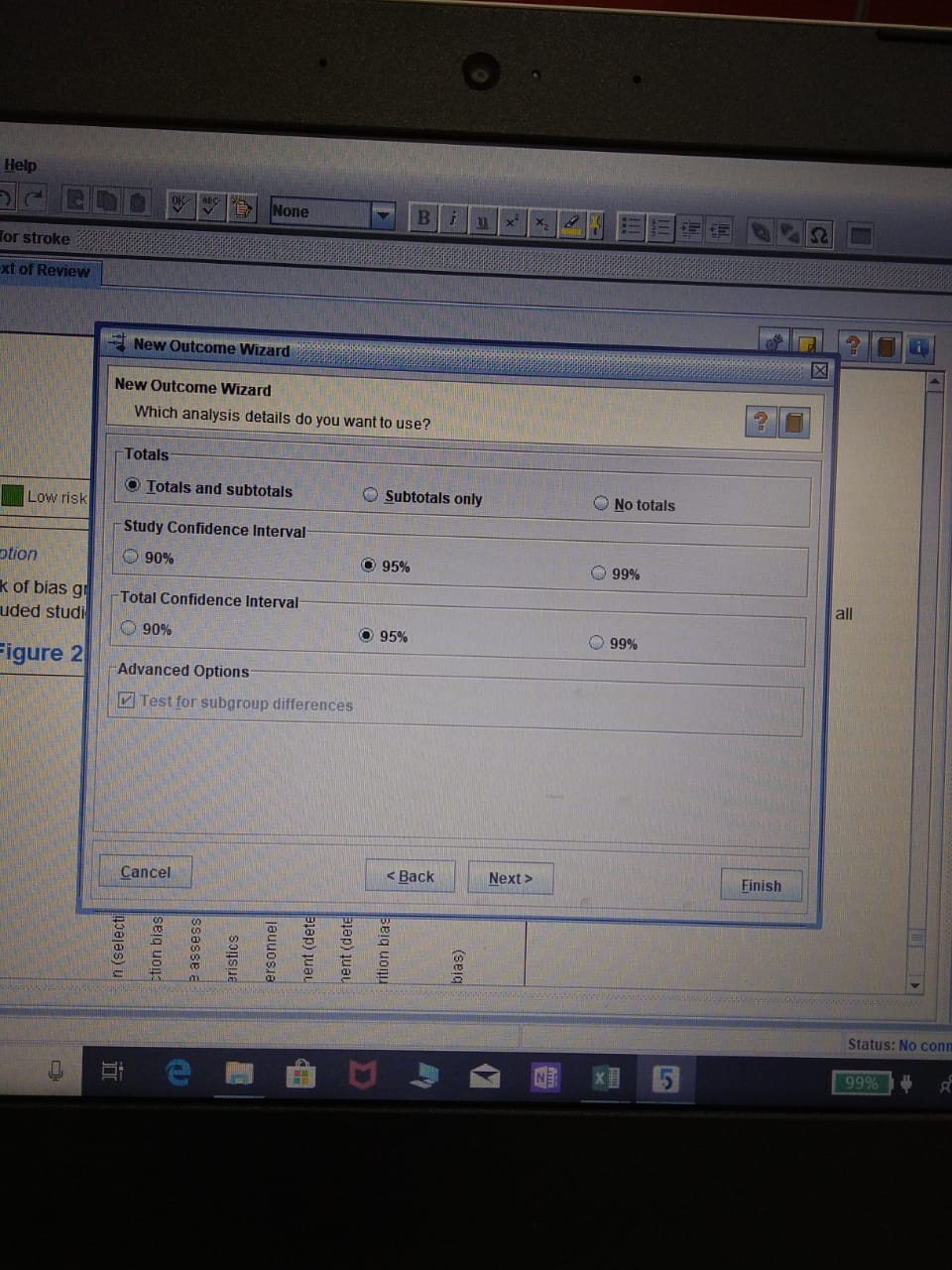
10. Go to next and choose your percentage of confidence interval as shown

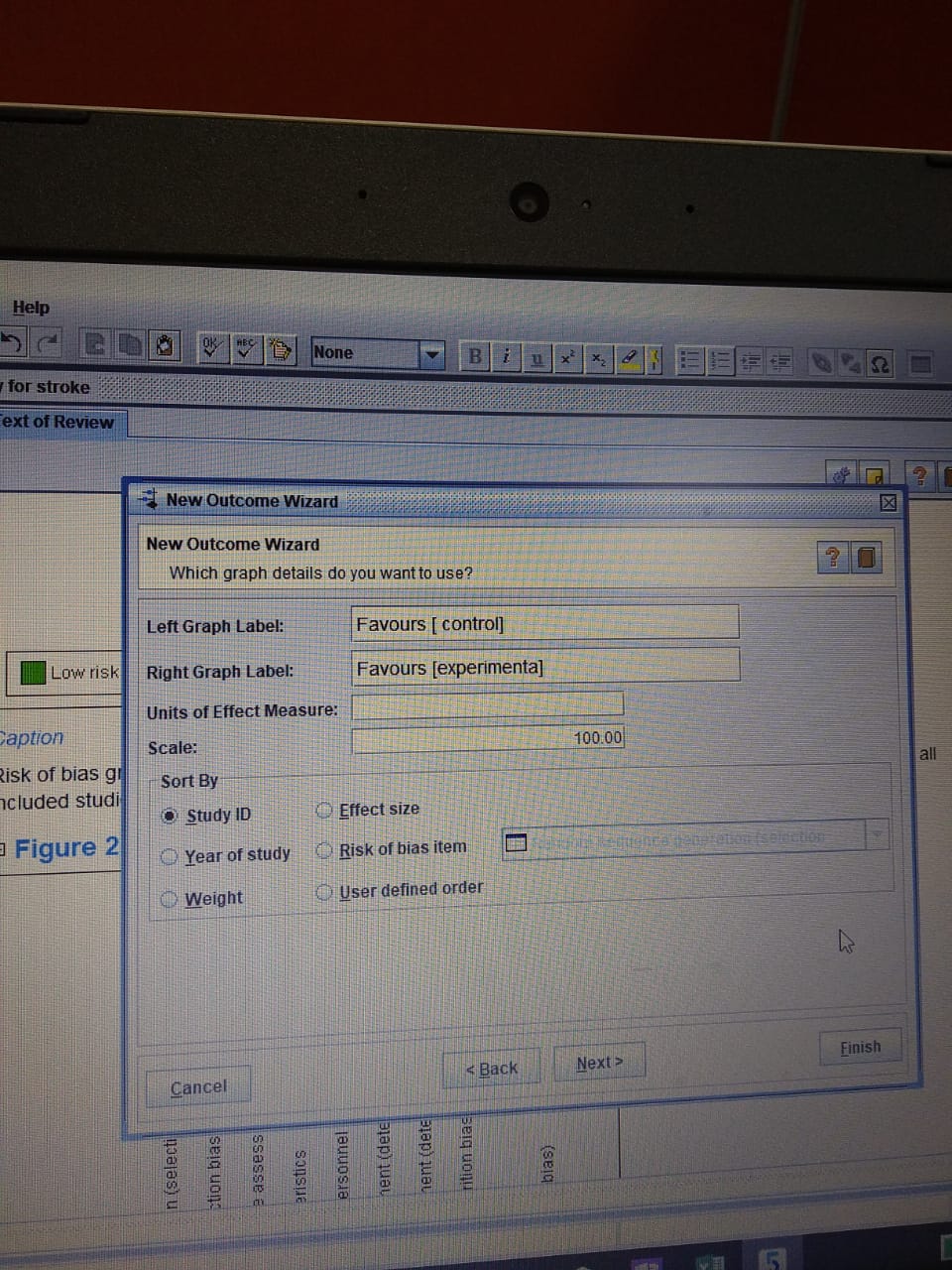
11. Go to next and label the axis for experimental and control group depending on your outcome measure, whether it is increasing or decreasing.

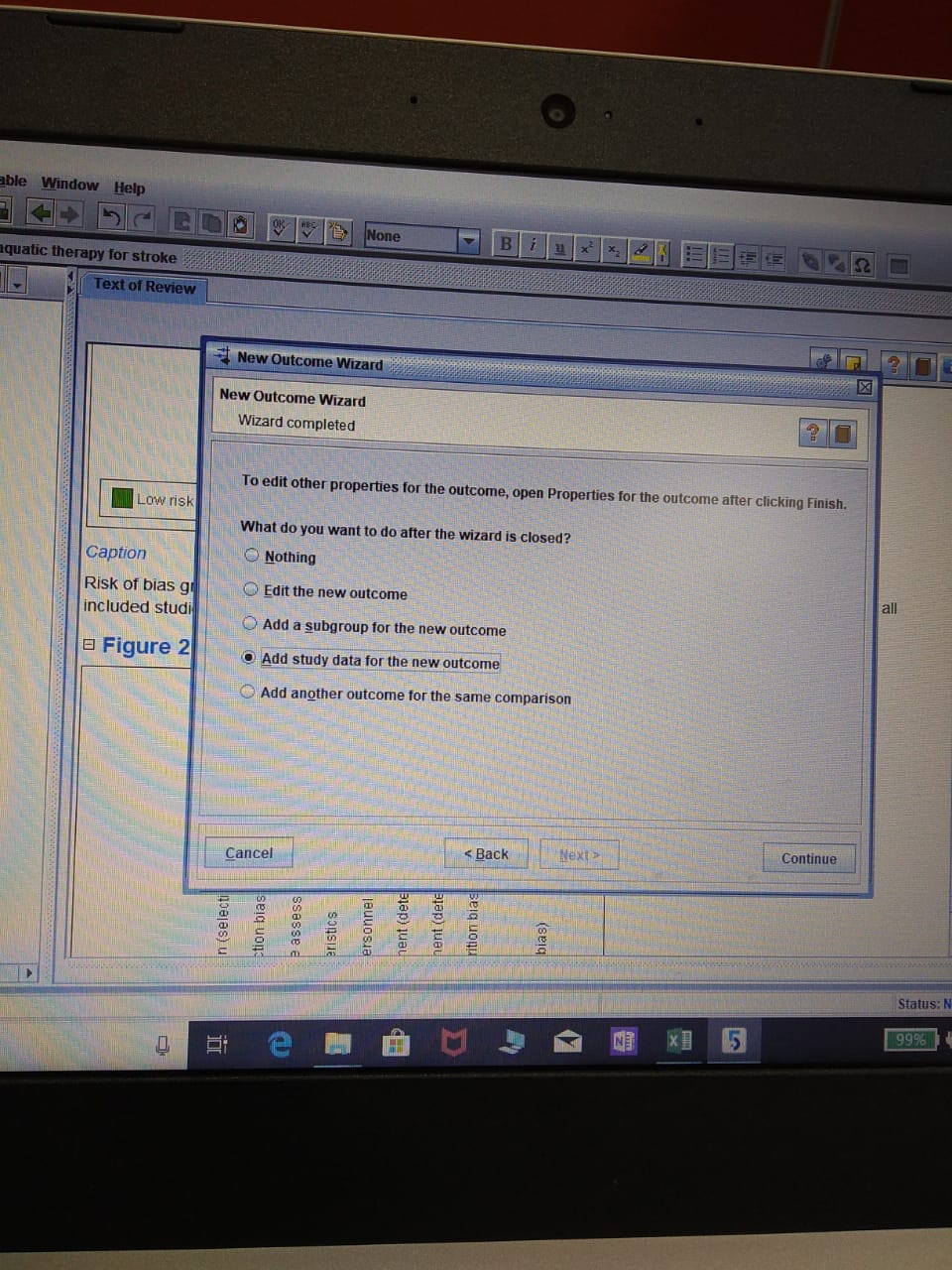
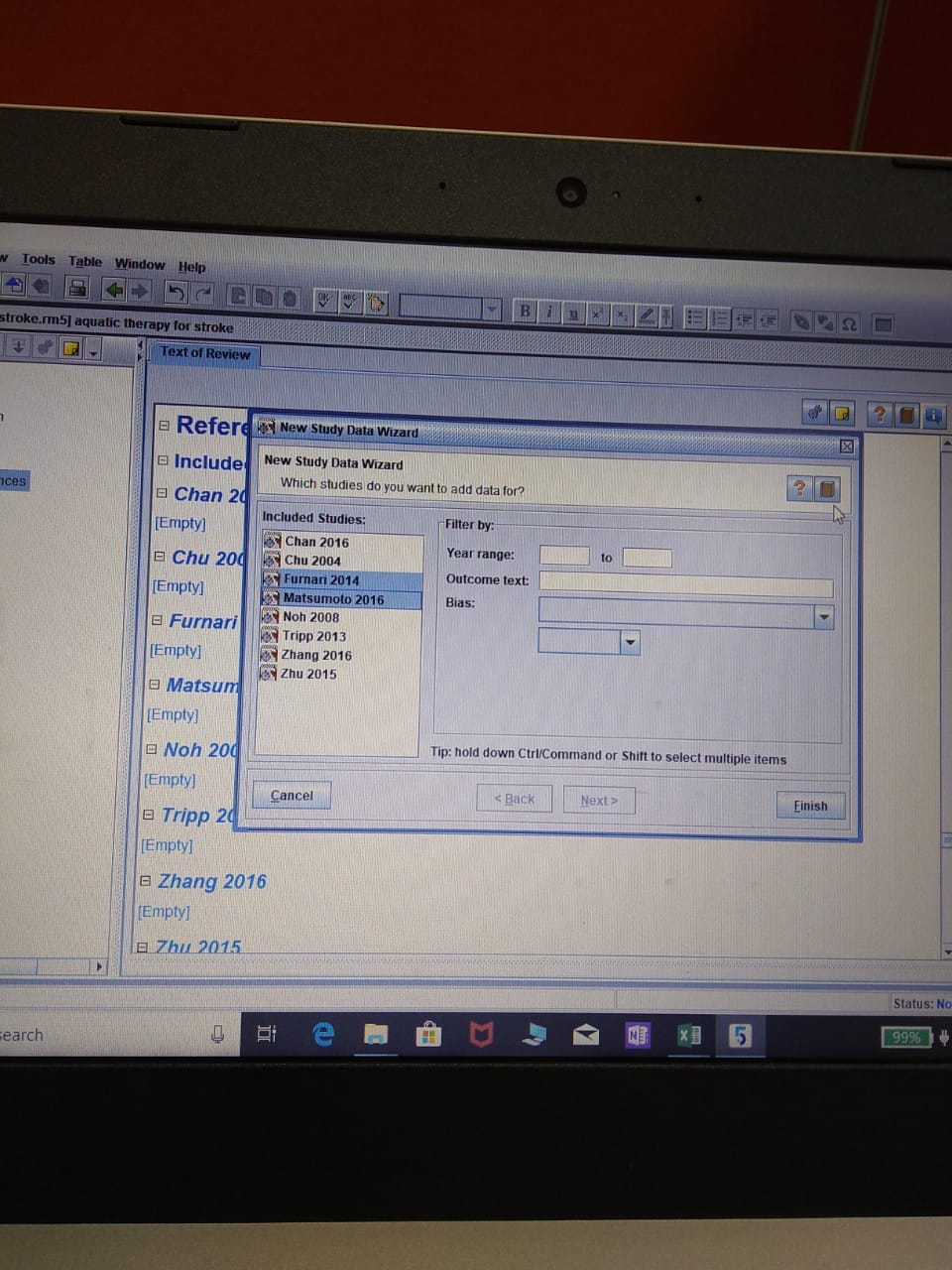
12. Click on next and click – add study data for the new outcome

13. Continue and choose the studies from which you will add the data. These chosen studies should have the homogeneous data.

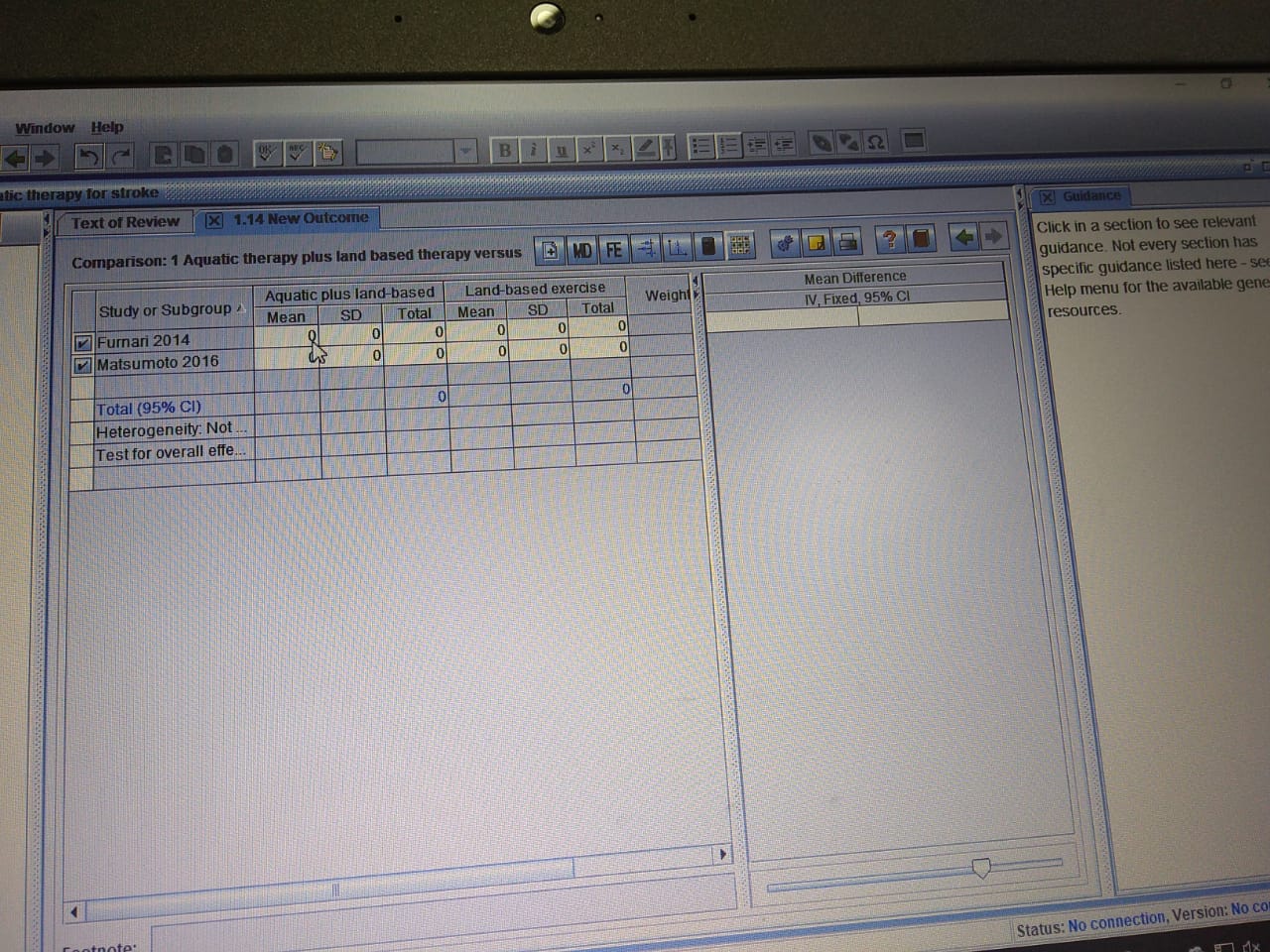
14. After adding the studies, click on finish and you will see the following table.

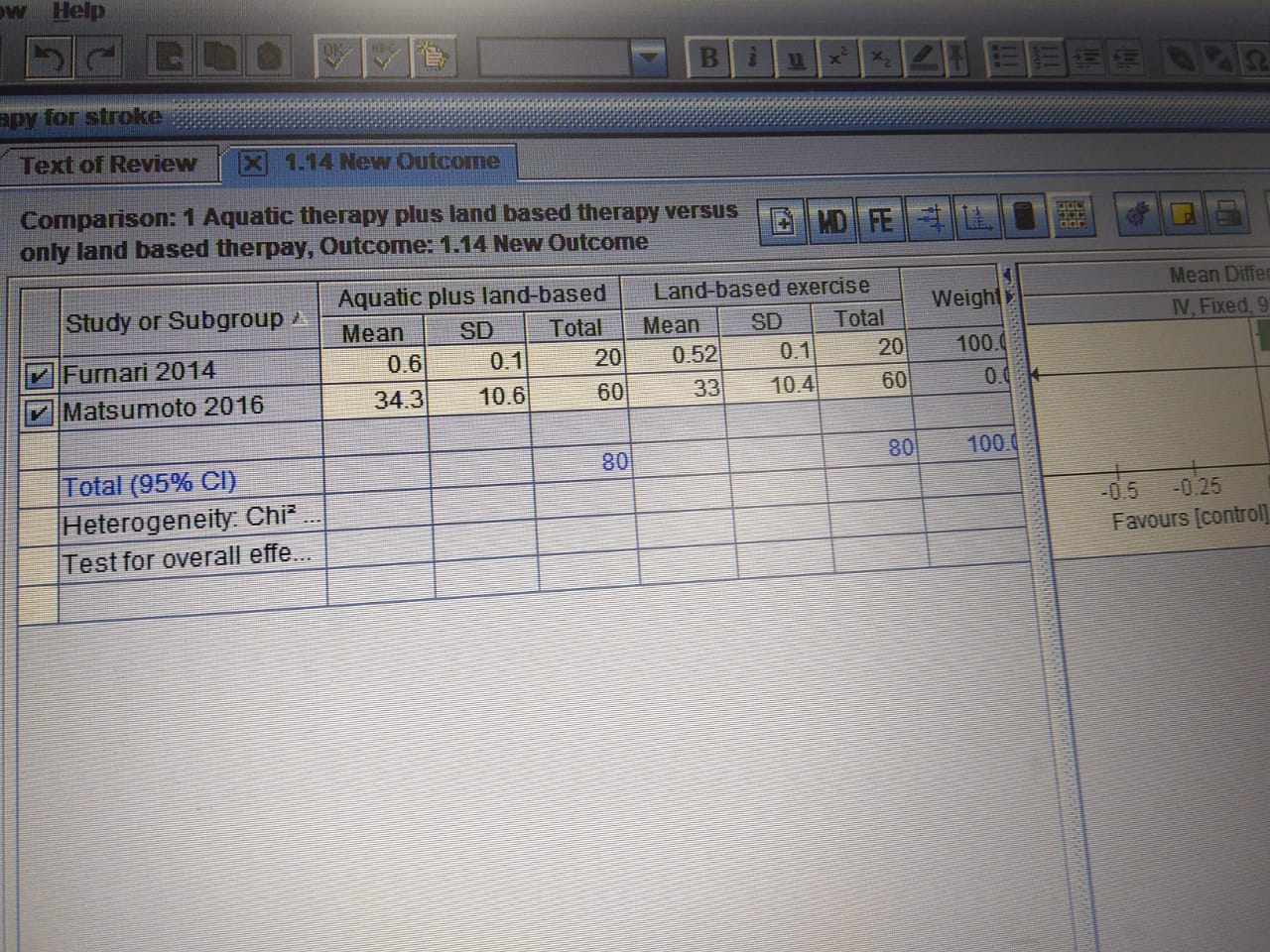
15. Now manually add the post intervention mean and SD values as well as total number of participants for the experimental and control group as shown in the picture

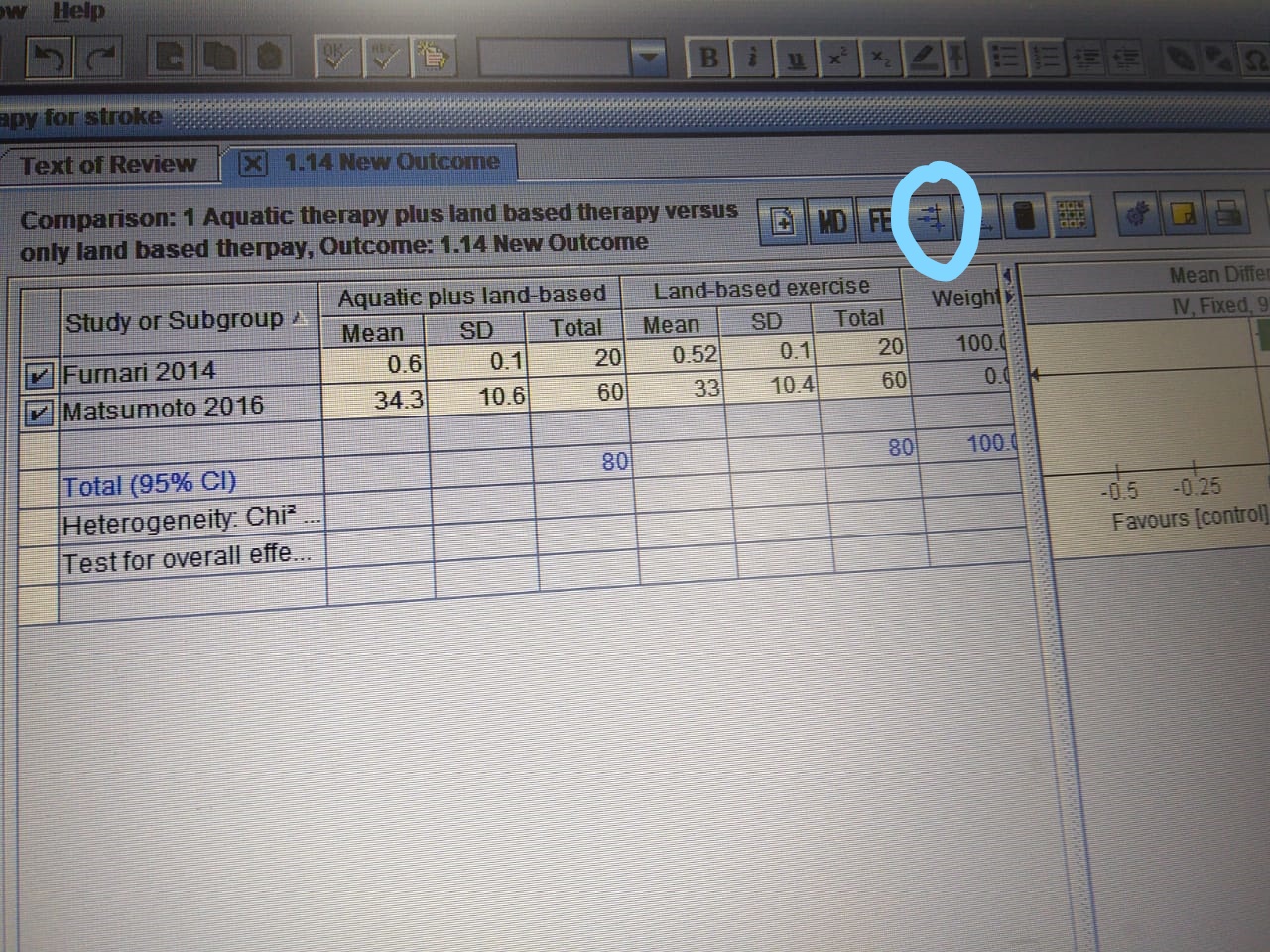
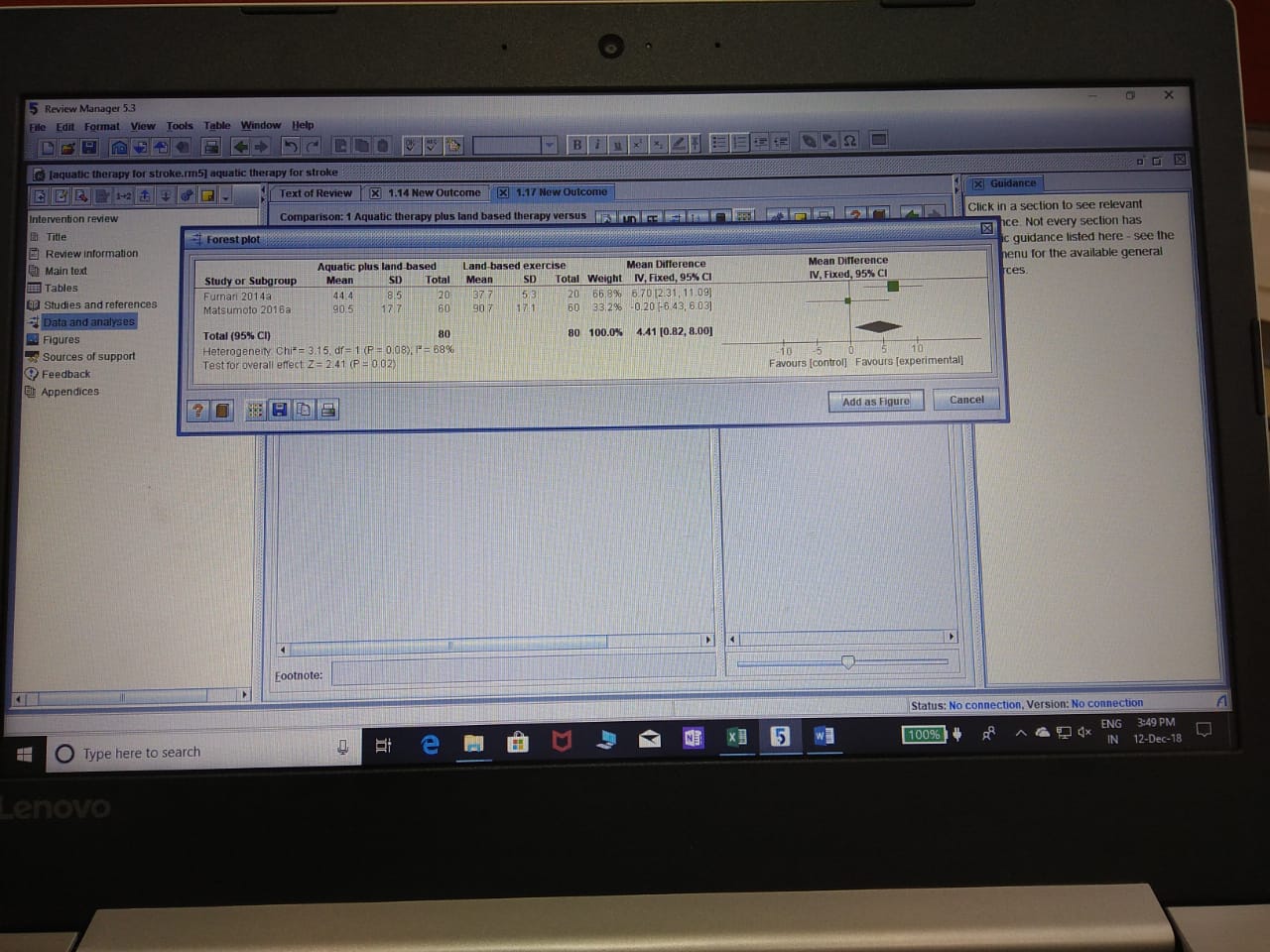
16. You will get the analysis as soon as you enter the data. Click on the forest-plot icon to generate the forest plot

17. This is your final forest plot which you can copy in your text. While reporting, include p-value, confidence interval, heterogeneity and effect size

That’s it! Hope you enjoyed doing the meta-analysis on your own. Feel free to comment if you did not understand any of the steps.

10 Tips to Grow as a Researcher – for Beginner Doctoral Students and Aspirants

Hello everyone, this post is different from my previous posts on systematic reviews. In this post, I will share those skills that helped me grow as a researcher, and those that I learned/still learning during my PhD. These are a few skills that you should try to acquire while carrying out your research. Hopefully, it will be useful for you and will improve your career prospects 🙂

So let’s begin,

  1. Be patient – I was not eager to write this as a first tip, but, it is one of the most important skills for any researcher. I was and still, am very impatient and want to do everything at once. I gradually learned to slow down and give adequate time for everything to fall into its place. Being patient not only helps you to keep your cool but it also improves the quality of your work. Research done in hustle is likely to have more errors and flaws. When you are patiently giving time for something at hand – then you get to think more about the problem and find different ways to solve it.
  2. Be passionate – Passion is the fuel for the topsy turvy road of research. If you are not passionate about your research or not ready to undertake the never-ending problems encountered in every research field, then don’t jump into it. Passion will help you face those days when nothing works out, or you get failed at every attempt. With passion and focus, you can overcome the gigantic work required in a PhD.
  3. Be curious – Always be keen to learn something new because research methodology keeps evolving and you will have to keep pace with it. There is no ‘one-size fits all’ in research. There will be different study designs, different ways to collect data, new ways of analysis, new ways to approach a problem. Being curious will help you improve your research skills regularly. Try to learn at least one new concept every day, no matter how trivial it is.
  4. Keep reading– The more you read, the better you will be. It is not something new, but we often tend to forget it when we get too involved in other deadlines and tasks. If you can’t read every day due to your work schedule, then try to keep one day off only for reading and updating to the latest research in your field. It can be boring, but you can befriend your coffee 😉  
  5. Help others– Try to help your friends and juniors as much as possible, I am not saying to leave your work and help them throughout the day but if you get an opportunity to share your knowledge and skills with others then don’t miss it. It will make you very clear about your expertise as well as areas where you need to improve. It will also give you a different perspective of the same situation, which you would not have thought of before. Every time I helped someone in their research work, I have learned something new in the process. 
  6. Plan and organize – Of course, this is the most common advice we get as a research student, but still it cannot be understated. Lack of planning and organization will delay your work extensively, and you may end up being demotivated. Poor organization and time management can affect (in a negative way) even the best of research ideas/work. So, know your timeline, follow it and STICK TO IT!
  7. Meditate – This sounds a little off-track, but it is one of the most powerful techniques which I learned recently. It significantly reduces your stress level and enhances your focus. If you are not a ‘meditation-type’ person then you can be mindful for a few minutes each day. It gives you clarity of thoughts and sets the tone for productivity.
  8. Presentation and public speaking – It is a very common fear which we all have, but good communication is a much-required skill in research fraternity. You should be able to present your work, convince others about its impact and also collaborate if required. These skills develop over time and with practice so don’t be disheartened if you do not have the confidence in public speaking yet. You will learn it if you try!
  9. Keep writing – We all are pleased to see well-written articles and wonder if we could ever write like those authors. It is an essential skill to develop as a researcher. It is required everywhere, for protocols, for grants, for publications, for collaboration, so on and so forth. Our words are our biggest strength. So, keep writing until you get it right.
  10. Be dedicated – I chose to write it as the last tip so that it stays in your mind for long. You will have answers to all your problems if you are dedicated, not literally, but you get the idea. Dedication will help you climb the ladder of success. It is required to maintain the brilliance of your work and gives you a chance to improve it with every step. So, don’t take it easy and casual.

There are many more skills that you have to develop for becoming a successful researcher. But, I feel that these ten tips are central in the journey of young researchers. I hope you enjoyed reading it.

How to assess Risk of Bias in a Systematic Review?

Hi, welcome back! Hope your reviews are progressing well. If not, then don’t worry and follow each step at a time. Focusing on one step is easier than trying to understand the entire process. In the last post, we discussed data screening and extraction (https://scienceiq.blog/2019/03/23/how-to-screen-articles-and-extract-data-for-a-systematic-review/). Today, we will move on to one of the most fundamental steps of a systematic review, i.e., Assessment of Risk of Bias of the included studies. I will briefly discuss – what is a bias, why it should be assessed, types of biases and how to assess it, with more focus on interventional studies.

What is Bias?

We research to know the truth or reality of the situation. Bias is a deviation from the truth. Example, if a study is not well conducted, then its results may be deviated from the actual reality. Therefore, any methodological flaw in the study may lead to biases in the results or its interpretation.

Why should bias be assessed?

We assess the risk of bias in a study to detect if the results of that particular study are underestimated or overestimated. We do not want to go on face value and need to find the actual truth. If a study has many risks of bias or it is not well-conducted, then it is likely to be reflecting a false/skewed picture. We need to be careful when accepting the results of any study. Especially when we are performing a synthesis of the literature, we need to assess the risk of bias to generalize the findings of the study.

The quality of your systematic review is the quality of studies included in the review. So you need to make sure that the studies included have good quality/fewer biases. If not, then you may either exclude those studies or add a word of caution about interpretation of the results. This is the most important step in a review and requires some experience and understanding of the subject.

What are the different types of biases?

Bias can be present in any form and requires different ways to assess it. Most common biases that may manipulate the results are selection bias, performance bias, detection bias, attrition bias and reporting bias.

Selection bias may be present when the participants in the experimental and control group are not similar at baseline. For example in the experimental group, all the participants are younger than in the control group so the outcomes are automatically better in the experimental group. Such kind of flaw is present due to selection bias. This bias can be minimized by the random selection of participants through random sequence generation and allocation concealment.

Performance bias is present when the participants in one group are more likely to perform an intervention better because of their or investigators’ awareness about the group to which they belong.  Example, if participants in the experimental group receive more care and motivation compared to the control group to achieve additional effect of an intervention. It can be minimized by the blinding of participants or personnel to the intervention and allocation concealment.

Detection bias is similar to performance bias, but it is present due to outcome assessor. If the assessors are aware of the group of participants, then they may measure outcomes differently. Detection bias often exists in the subjective assessment of outcomes. Example, an outcome assessor, may give better scores to the experimental group and poor scores to control group to show more effect of the given intervention. It can be minimized by blinding of outcome assessor to the intervention.

Attrition Bias is present when one group has more attrition/dropouts compared to the other group. The statistical analysis may vary due to the difference in participant number in both the groups which introduces bias. It can be minimized by complete data collection and providing reasons for dropouts in each group.

Reporting bias is present when some of the outcomes are reported while some are skipped. It usually happens when an author reports only the significant outcomes and do not mention about the outcomes that were not significant. It can be minimized by reporting all the outcomes of the study.

How to assess Risk of Bias?

Risk of bias can be measured by looking into the methodology and different domains at risk. Example, in an interventional study, you need to ask questions: were the participants randomly allocated to the experimental or control group? Was there any allocation concealment? Were the outcome assessor and participants blinded? Were all the outcomes were reported? What was the attrition rate in both groups?

Cochrane tool for risk of bias measurement is the recommended tool for interventional studies. For other forms of study design, I have tabulated the commonly used tools. Scales that provide summary scores are NOT recommended for risk evaluation because of the validity of such scales.

Type of study design ROB Tools
Interventional study Cochrane Risk of Bias tool,
JBI Critical appraisal tool
Diagnostic
study
Quality Assessment of Diagnostic Accuracy Studies (QUADAS-2)
Critical Appraisal Skill Program (CASP)
JBI Critical appraisal tool
Prognostic/
Prevalence study
CEBM Prognosis Appraisal worksheet
JBI Critical appraisal tool
CASP cohort study checklist
Accuracy of
Outcome
Measurement
COSMIN checklist
Qualitative Study CASP Qualitative checklist
JBI Critical appraisal tool

Once you have assessed the risk of bias for each study, summarize the biases in each study, across the different domains, and overall risks present. You can use RevMan to generate appealing tables and graphs for Risk of Bias that you find in Cochrane reviews. You may refer to the following articles if you wish to read further.

1.     BMJ 2011;343:d5928 – The Cochrane Collaboration’s tool for assessing risk of bias in randomised trial

2. Alex Pollock and Eivind Berge, 2018 https://doi.org/10.1177%2F1747493017743796

How to Screen Articles and Extract Data for A Systematic Review

Welcome back! It’s been a long time since I wrote the posts on systematic reviews. For those who are reading this blog for the first time, I have written previous posts on step by step methods to conduct a systematic review. The last post was on developing the search strategy
and running the search in different databases. (https://scienceiq.blog/2019/01/21/how-to-develop-the-search-strategy-for-a-systematic-review/) In this blog, I will be writing about – how to screen the retrieved articles and to extract the data from included articles.

Screening the articles is easy but one of the most time-consuming tasks in a review so we have technology and software to help us. Let us see in the steps below:

Run the search and retrieve relevant articles:

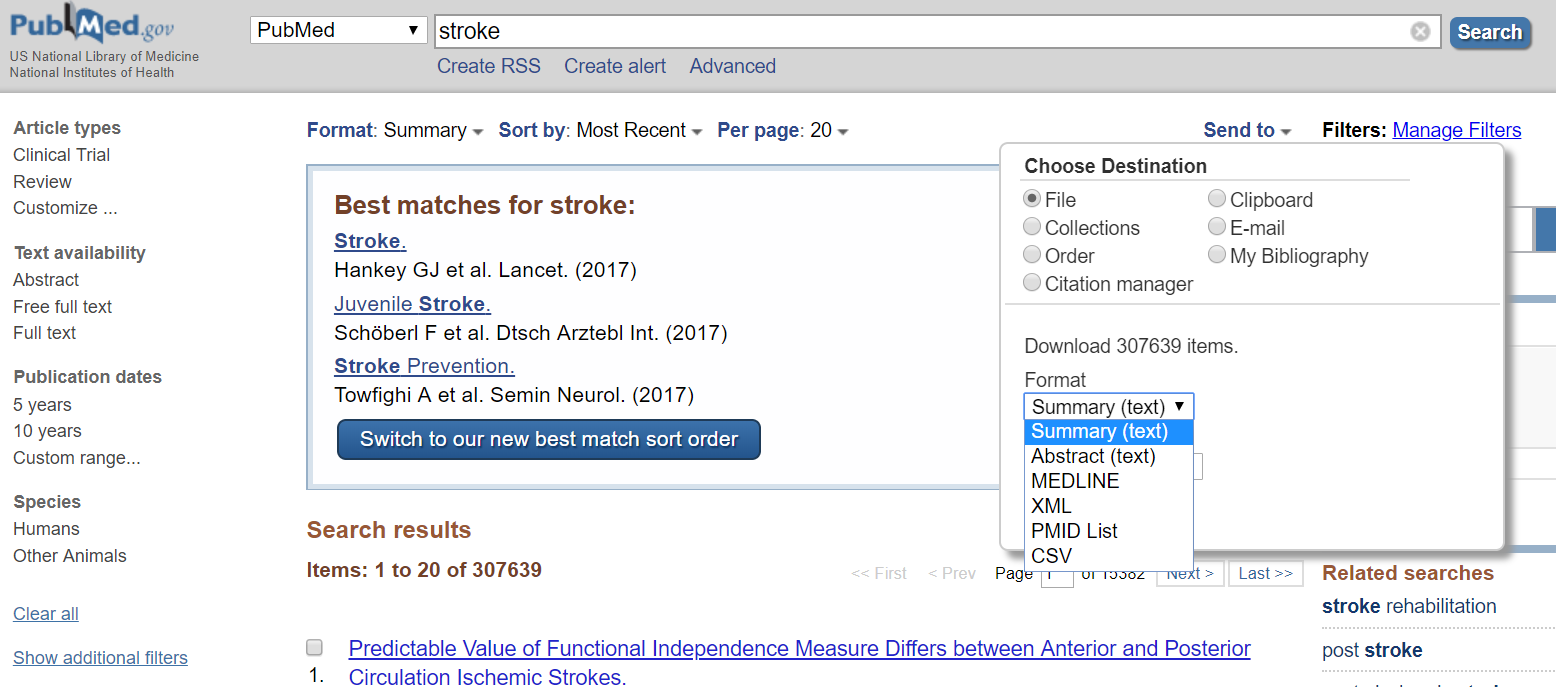
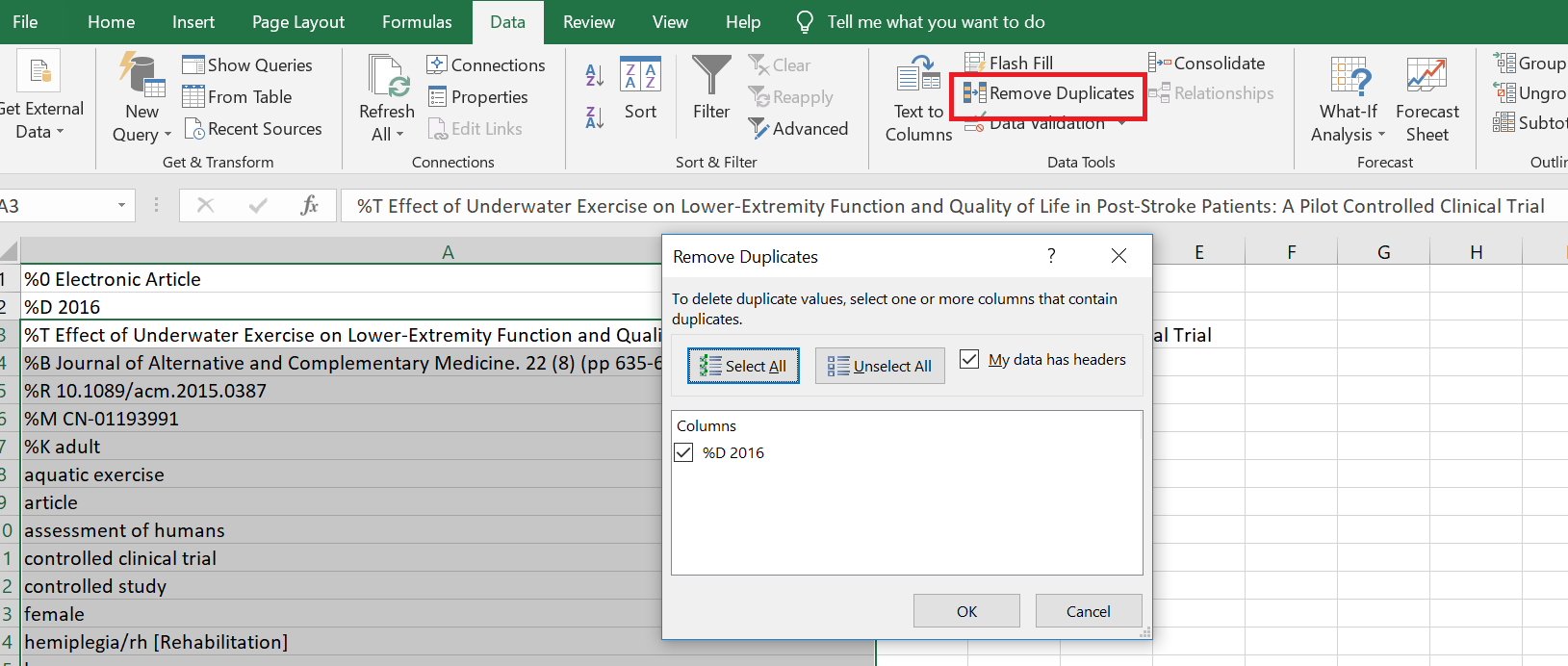
Once you have run the search in different databases, you will import all the search results in one of the following formats: ris, XML, csv, MEDLINE, etc. (Picture 1) After downloading the results, you will have to remove duplicates. You can use any of the software that I have mentioned below or even Microsoft Excel to remove duplicates, as shown below. (Picture 2 & 3)

Picture 1- Formats of search results
Picture 2 – Importing articles in excel file
Picture 3 – Removing duplicates in excel file

Start Screening:

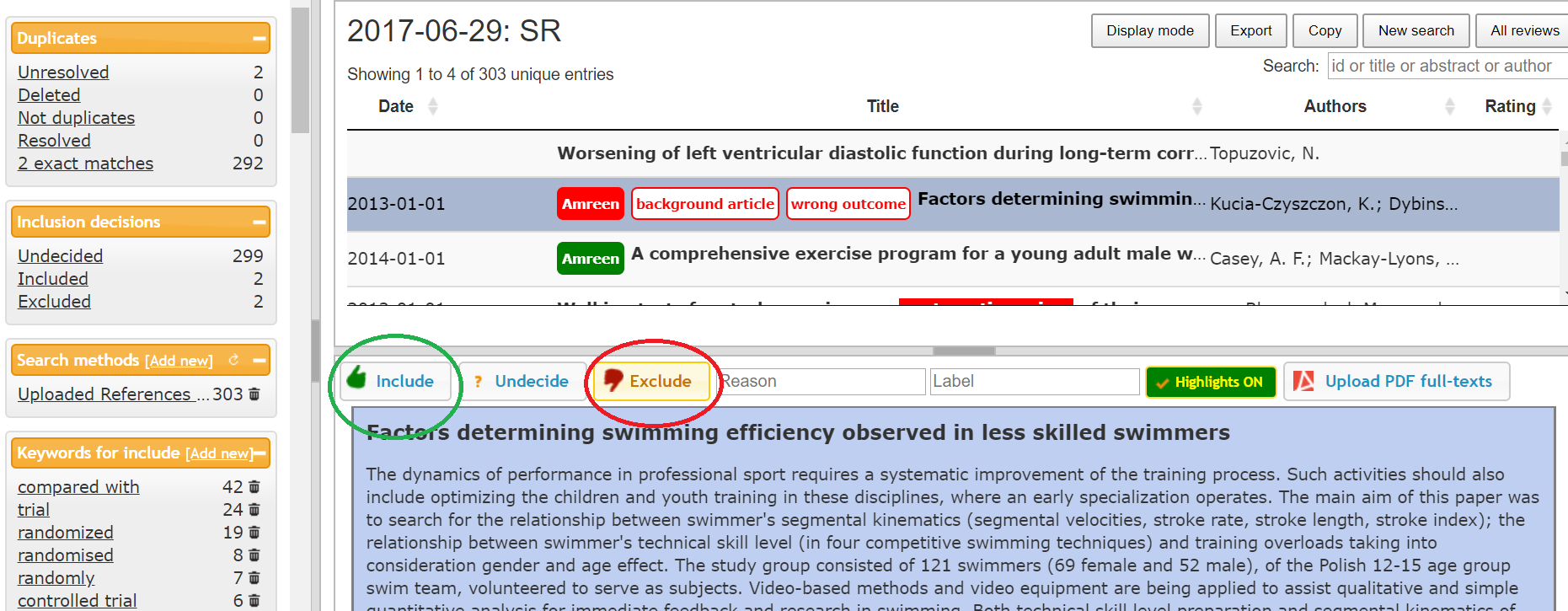
Once you have removed duplicates, you should start screening the articles for inclusion criteria.  It can be done in two ways- manually (which is a herculean task) or using online/offline software. Some of the software which makes life easier are Rayyan (https://rayyan.qcri.org/welcome), Endnote, DistillerSR (https://www.evidencepartners.com/products/distillersr-systematic-review-software/) and RevMan. Get acquainted with any one of the software and start screening the articles by looking at the title and abstract.

I have given an example of screening articles in Rayyan software in the picture below. (Picture 4)

Picture 4 – Article screening in Rayyan software

Go to Full-Text Screening:

After excluding articles based on the title and abstract screening, begin full-text screening. When you are not sure about including an article by just looking at the abstract then always save it for full-text screening. Many of my friends are intimidated by the idea of reading manifold articles for full-text screening, but you don’t have to understand the details of each article- screen it by a bird’s-eye view. When screening an article, always follow the PICO format. Eg. First check if population fits in your criteria, if yes then move to intervention/exposure otherwise exclude it.

Population → Intervention → Comparison → Outcome

By using this method, you can easily scroll through the article and not get confused in the process.

Extracting data:

Data extraction depends largely on your research objective. Two people can extract different data from the same article depending on their research question. Cochrane has some data extraction templates. You can modify it according to your objective and always pilot test it using sample articles. Discuss it with your supervisors and get started with data extraction. I am attaching the screenshot of a simple data extraction form. (Picture 5)

Picture 5 – Data extraction form

What’s next?

I was in a dilemma after completing data extraction. I was unsure about the further steps and did not have the confidence to appraise the articles (because I was not thorough with the included studies.) Once you have successfully extracted the data from all the included articles, try to understand the meaning of the extracted data. Don’t be in a hurry to analyze it. Develop some deeper understanding of your data and try to appraise it critically. Once you have fully understood the included studies and its methodology then go-ahead with the next steps (I will discuss it in the upcoming blogs.)

Tips:

#1- Article screening should be done by two reviewers independently, and any doubts in the decision of including the article should be discussed with the third person or experts.

#2- Using excel file for data extraction will reduce the time and effort of summarizing the articles again.

That’s all for data extraction. We will be moving to data synthesis in the next few blogs. Happy reviewing!

HOW TO DEVELOP THE SEARCH STRATEGY FOR A SYSTEMATIC REVIEW

Hello all, welcome back after a long break. Hope you have registered your review in PROSPERO by now. We are now moving to the crucial yet less discussed step of a systematic review, which is developing the search terms. Search terms are the engine of a systematic review. If it is in the right direction, it reaches the destination but if it’s in a wrong direction, it can mislead you, and you might not reach your end-point. The search in a systematic review should be as extensive as possible to ensure that all necessary and relevant articles are included. After all, you are generating the evidence!

Before you run the search and retrieve articles, be careful about what and how many search terms you have used. Ask for help if you are unsure about it. Many of my friends have asked me about it, and I have told the same thing which I am going to tell you now…Using more search terms is not wrong but using fewer terms might lead to missing of some pertinent articles. Don’t be scared to use as many terms as possible in the beginning, and later you can delete the irrelevant terms. Let’s see the stepwise procedure.

  • Decide your keywords:

You begin by deciding your keywords. Keywords are the words which summarize your topic. You have to use your PICO terms for deciding your keywords. E.g., if my topic is ‘Effect of TENS on spasticity in adults with stroke’ then my keywords will be ‘TENS’ AND ‘Spasticity’ AND ‘Stroke.’ We also call keywords as concepts.

  • Expand each keyword:

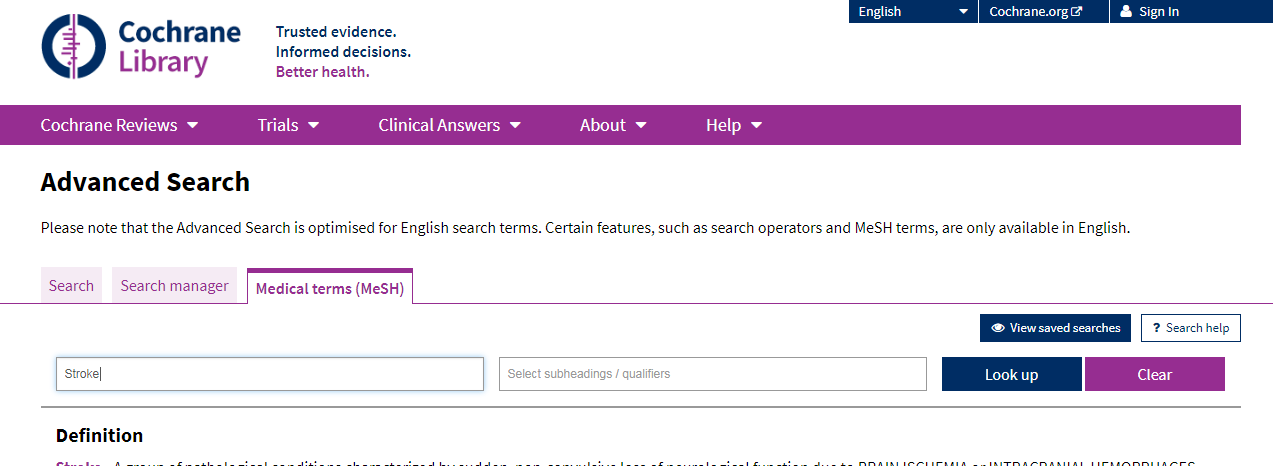
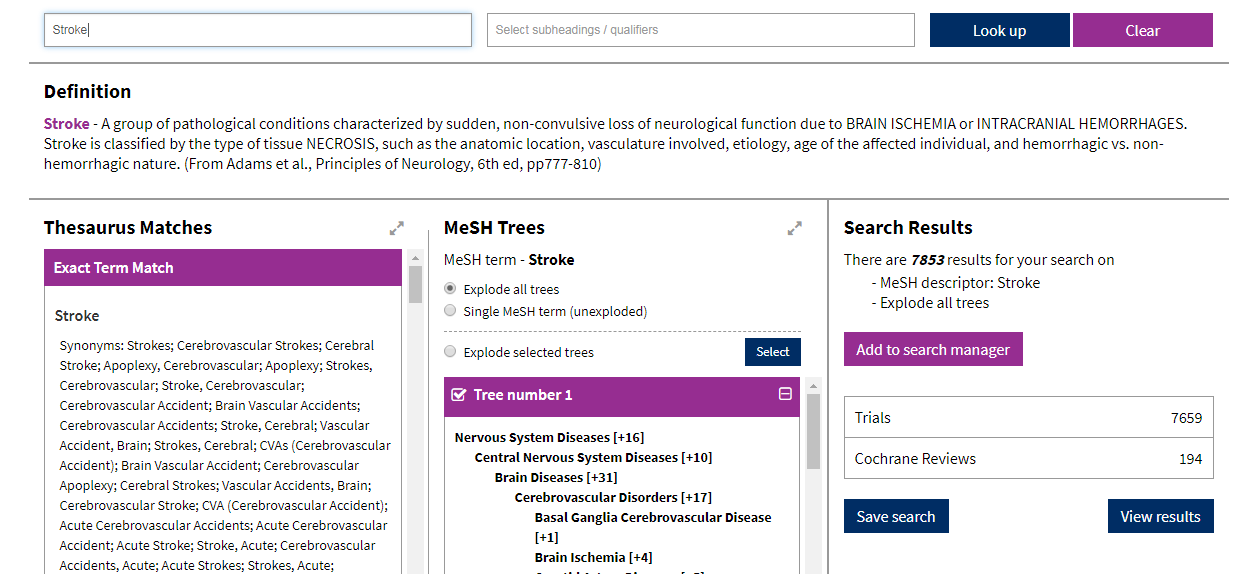
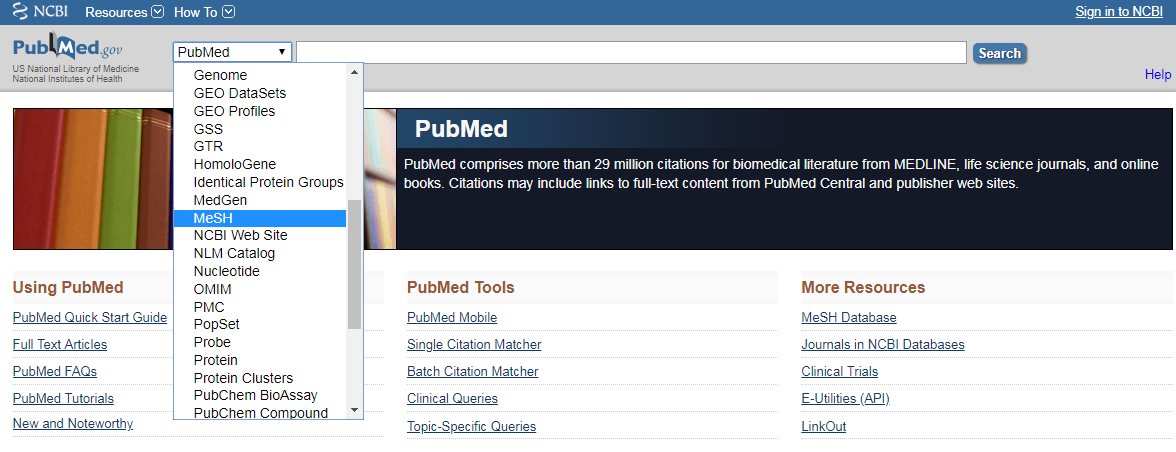
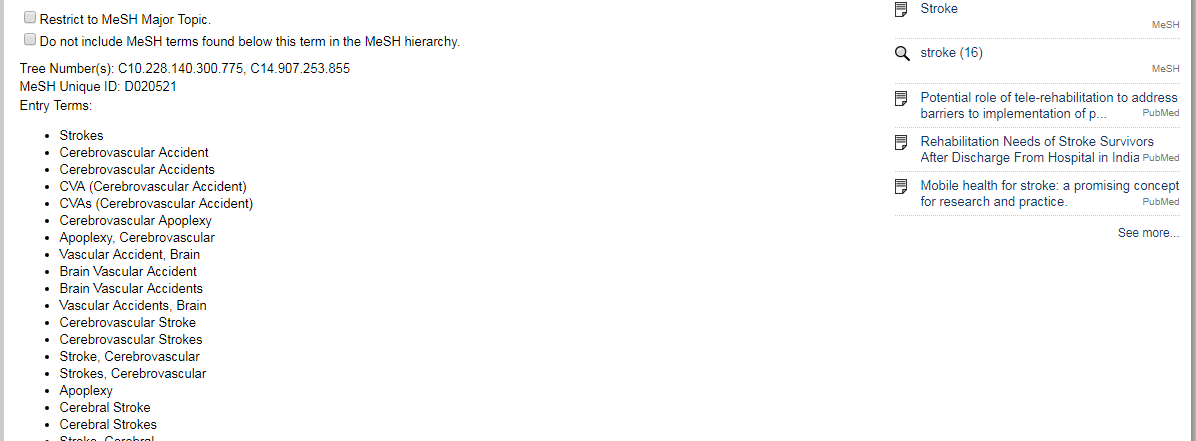
Now that you have decided your keywords start growing the terms for each concept/keyword. You can do that by looking for synonyms for each word. Add singular as well as plural words, e.g., activity and activities. You can use variant spellings, e.g., Disc and disk. You may also add other related terms to widen your search.  Truncation and wildcards are other smart ways to retrieve related articles. E.g., for truncation is ‘random*,’ if you use this truncation, then it will search all terms related to random, i.e., random or randomised or randomized or randomly, etc. E.g., for wildcards is ‘wom?n’  so it will include articles with both woman or women. Another simple way to look for synonyms is jotting down all the MeSH terms of the keyword from PubMed and Cochrane. I have attached the pictures on how to search for MeSH terms. You can also add synonym by going to the appendix of any Cochrane review done on a similar topic and writing down the words used in its search strategy.

Finding MeSH terms in COCHRANE
Finding MeSH terms in PubMed
  • Tabulate the search terms:

For clarity and convenience while running a search, tabulate all your keywords as shown below using the same example of keywords as given earlier.

Stroke TENS Spasticity
cerebrovascular accidents transcutaneous electric nerve stimulation stretch reflex
cerebrovascular disease transcutaneous nerve stimulation muscle hypertonia
brain ischemia transcutaneous electrical neurostimulation spasm
carotid artery disease percutaneous neural stimulation clonus
intracranial embolism micro amperage electrical stimulation spastic paresis
intracranial thrombosis transcutaneous electric stimulation hypermyotone
intracranial hemorrhage   high tone
brain infarction   hypertonia
vertebral artery dissection   hypertonicity
hemiplegia   hyper reflexia
hemiparesis   hyperreflexia
monoparesis   hyper-reflexia
cerebral vascular disorder   spastic reflex
cerebellar vascular disorder   spastic
brainstem vascular disorders    
vertebrobasilar vascular disorders    
subarachnoid hemorrhage    
intracranial aneurysm    
infratentorial hemorrhage,    
supratentorial hemorrhage    
lacunar stroke    
intracranial arteriovenous malformations    
brain attack    
Final result = R1 R2 R3
  • Build your search strategy:

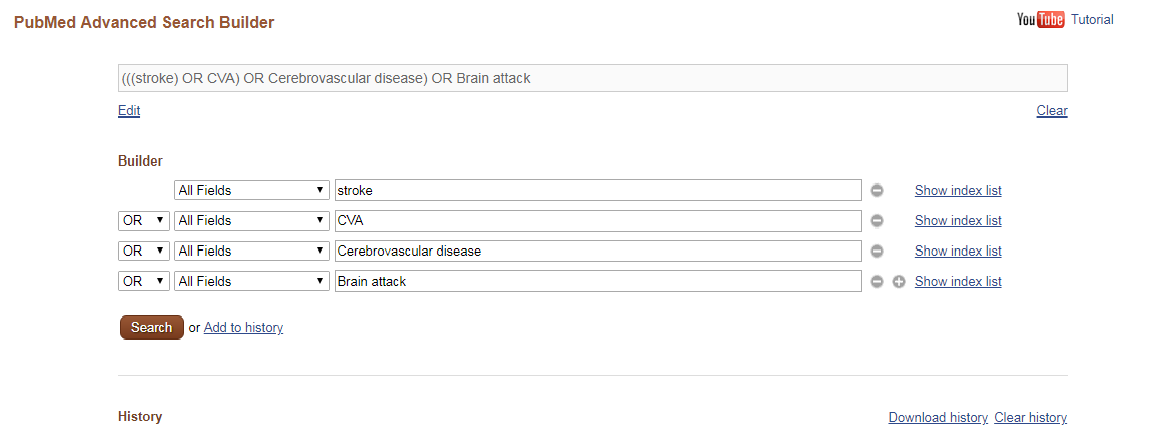
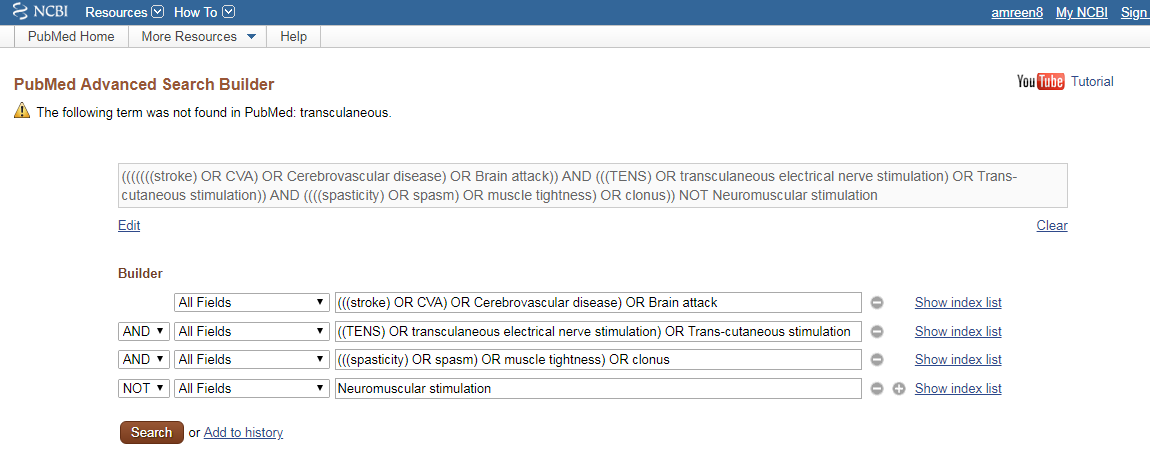
Now build your search strategy by joining the terms under each column with Boolean ‘OR’. Suppose after adding all terms, you get the final result as R1, R2, and R3 for each column respectively, then add all of these with Boolean ‘AND,’ i.e., R1 AND R2 AND R3. You can even add ‘NOT’ if you want to exclude a few terms specifically. See the example in the picture below.

Combining terms with Boolean OR
Combining terms with Boolean AND
  • Running the search:

Once you have completed the herculean task of developing the search terms, you can go ahead with running the search in different databases. You should also include conference abstract and other grey literature. Another important source which may have potential articles are trials registers of ongoing and unpublished trials.

  • Few tips:

Keep a record of all the databases searched and number of articles retrieved from each database. Save the search strategy and include it in the appendix of your manuscript. Additionally, try to keep a fine balance between precision and comprehensiveness. Which means that you should try to keep your search extensive but not so extensive that you retrieve more irrelevant articles. Don’t worry; it will come with practice and experience. Let me know if you have any muddles while building your search strategy.